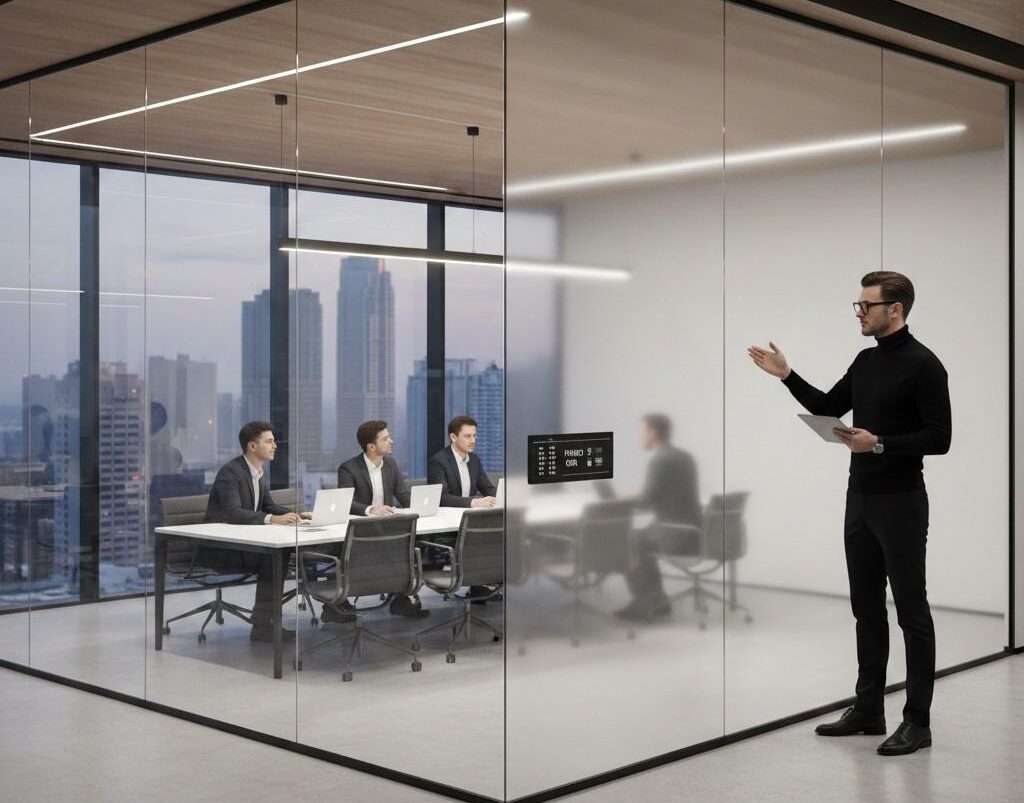
Smart Film in Modern Interiors
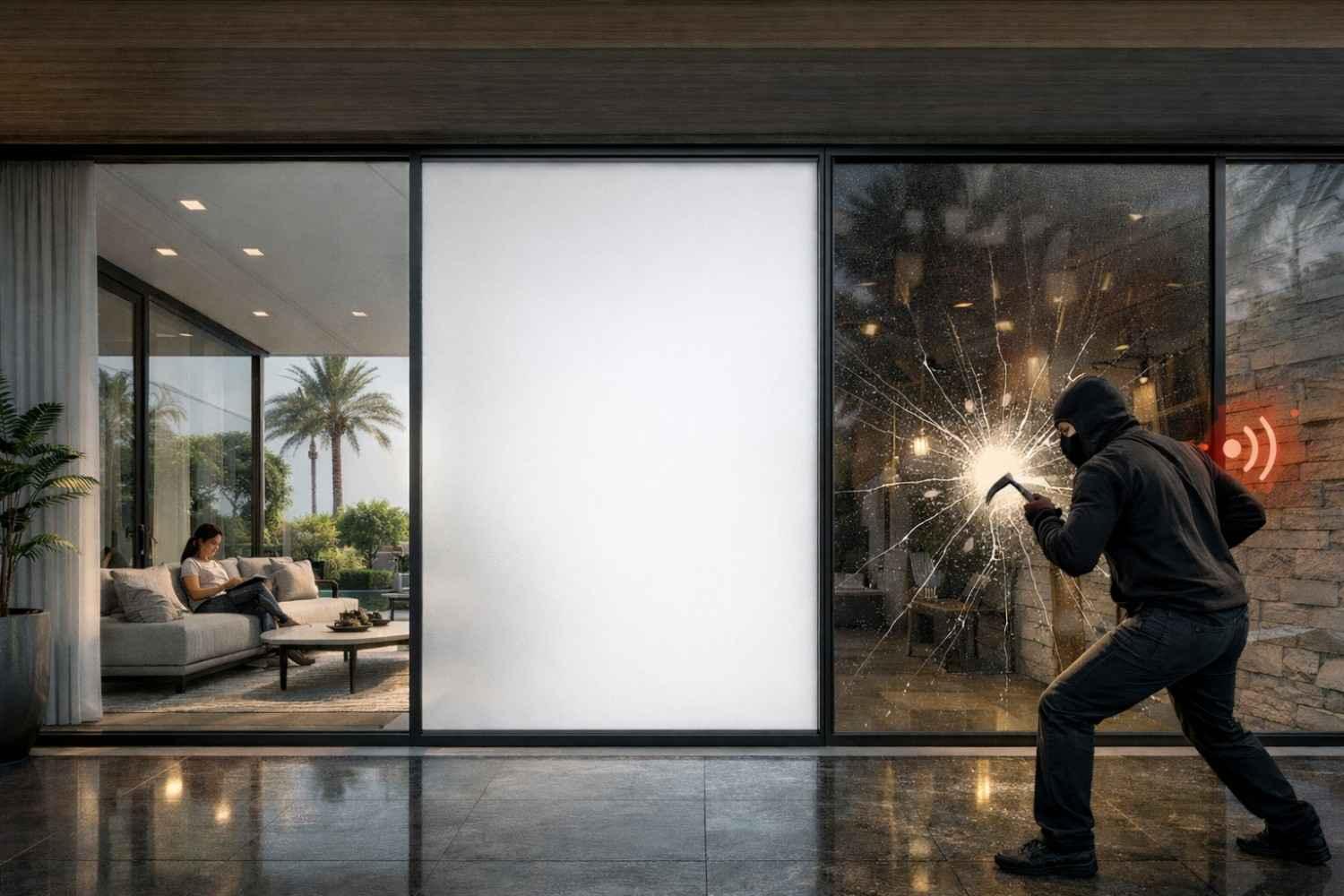
Smart film in modern interiors is no longer treated as a novelty or a short-lived trend. Across residential, workplace, hospitality, and healthcare environments, it is increasingly being evaluated as a legitimate interior material—one that responds to how spaces are actually used.
Open-plan layouts, expansive glazing, and minimal interior architecture have reshaped expectations around light, transparency, and visual openness. At the same time, these design choices introduce practical challenges around privacy, zoning, and adaptability. Traditional solutions such as curtains, blinds, or permanently frosted glass often undermine clean lines, interrupt sightlines, or dilute the architectural intent.
Smart film has re-entered the design conversation not as a replacement for glass, but as a way to allow glass to remain central—while making it more responsive. That said, skepticism remains. Questions about cloudiness, durability, and long-term performance are valid, particularly in premium interiors where visual quality and longevity matter. Understanding where smart film fits—and where it does not—is essential for using it well.
The Role of Smart Film in Modern Interior Design
Smart glass interior design has matured in how it is specified and discussed. Designers are moving away from technical descriptions of voltage or switching systems and focusing instead on how the material behaves within a space—how it handles light, depth, and visual continuity.
Smart Film as a Design Material, Not a Technology
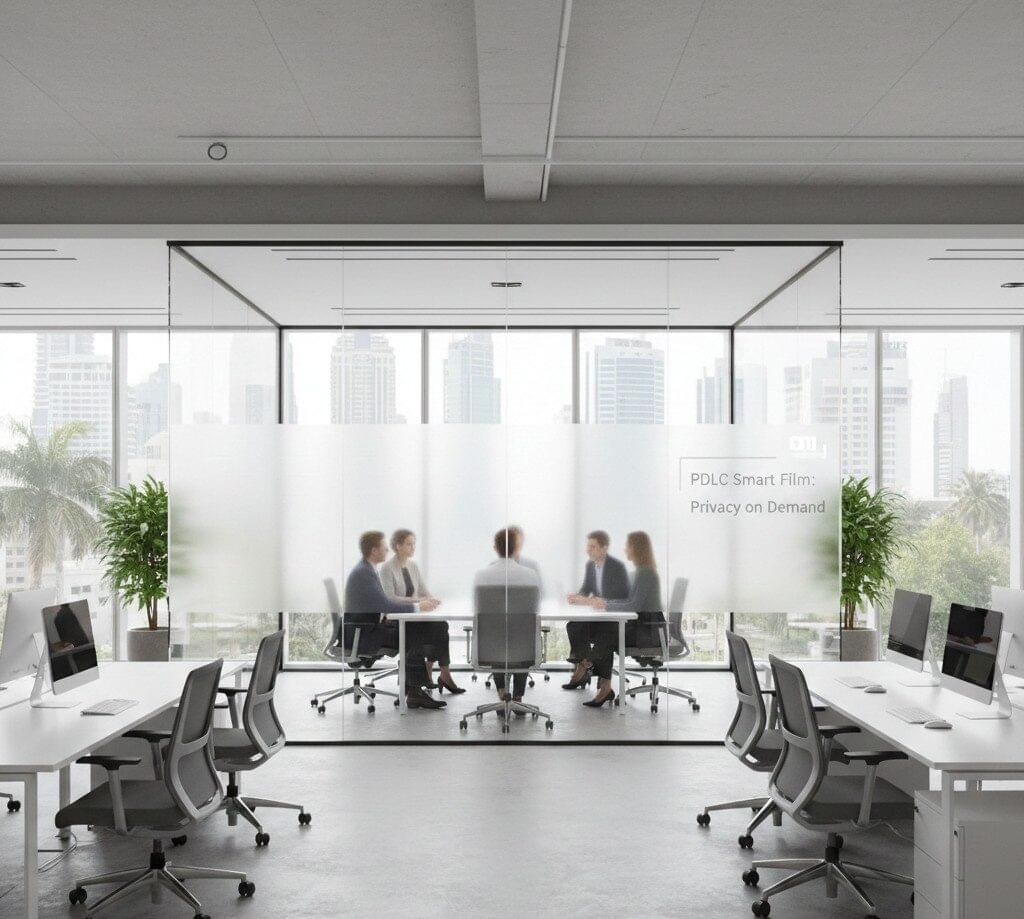
PDLC smart film interiors are best understood through their visual and spatial impact:
- Glass shifts between transparent and diffused states
- Transparency becomes adjustable rather than fixed
- Spaces gain flexibility without additional layers or hardware
This reframing is important. Many architects are cautious about technology-forward materials because interiors must age well visually. When smart film is positioned as a transformation of glass rather than an added device, it becomes easier to evaluate alongside finishes like stone, metal, or timber.
Where Smart Film Fits in Contemporary Interior Architecture
Placement clarity is critical for success. Smart film performs best when its role is clearly defined within the design strategy:
- Smart film interior partitions for adaptable zoning
- Windows where privacy is occasional rather than constant
- Feature glazing that supports openness without exposure
In these applications, switchable glass interiors allow designers to manage visibility without introducing visual clutter or mechanical systems.
Interior Design Trends Driving Smart Film Adoption
Interior design trends using switchable glass are being shaped more by lifestyle patterns than by technology adoption. Flexibility, visual calm, and spatial efficiency are driving interest.
Open-Plan Living Without Visual Exposure
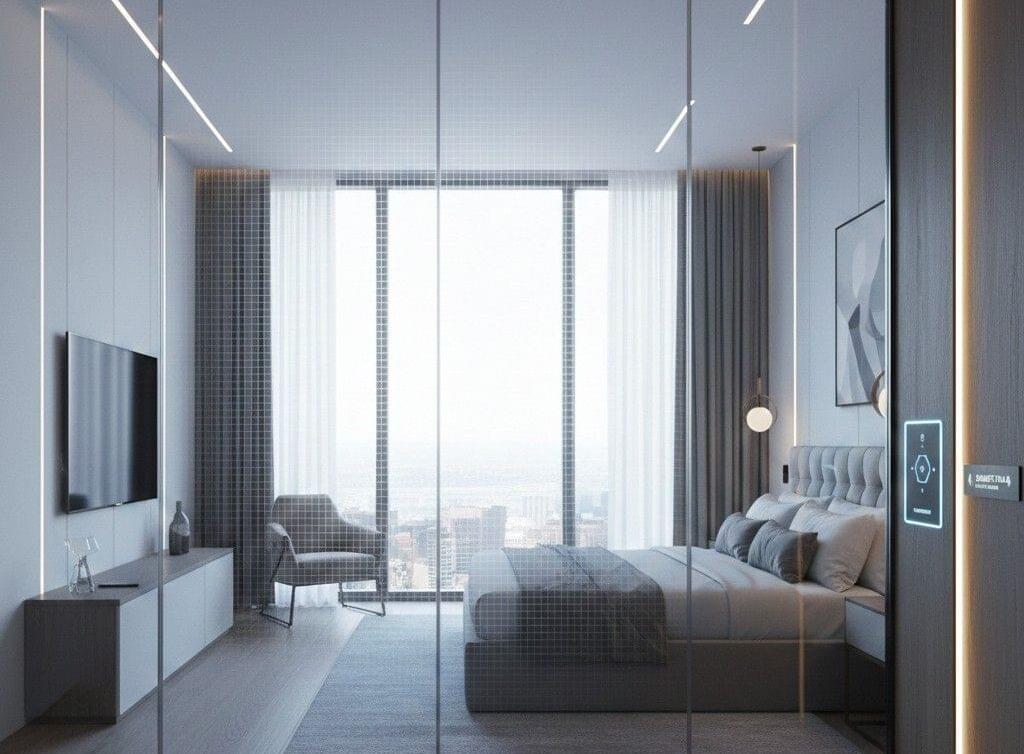
Modern interiors increasingly prioritise openness, but few occupants want constant visibility. Smart privacy glass for interiors allows spaces to remain visually connected while offering control when needed. Transparency and discretion no longer have to compete.
Minimal Interiors and the Removal of Visual Clutter
One of the strongest drivers behind smart film adoption is the desire to remove soft furnishings and surface add-ons from glass:
- No curtains interrupting light
- No blinds breaking vertical lines
- No permanent frosting reducing clarity
In professional environments such as clinics or studios, this also supports a cleaner, more hygienic aesthetic.
Flexible Spaces for Modern Lifestyles
As homes and workplaces evolve, rooms are expected to serve multiple functions. Switchable glass interior design supports:
- Work-from-home privacy
- Entertaining without permanent walls
- Adaptable meeting or consultation spaces
All without structural changes or visual heaviness.
Smart Film vs Traditional Interior Privacy Solutions
Smart Film vs Blinds and Curtains
Blinds and curtains introduce visual interruption and ongoing maintenance. They also tend to age faster than surrounding finishes. Smart glass partitions for offices and homes maintain architectural continuity while offering instant privacy when required.
Smart Film vs Frosted or Acid-Etched Glass
Permanent frosting fixes a space into a single visual state. Switchable glass interiors, by contrast, allow transparency and privacy to coexist. This reversibility is especially valuable in hospitality and high-end residential interiors where spatial depth is part of the experience.
Clarity, Cloudiness, and Design Acceptance
Does smart film look cloudy?
This is one of the most common questions we hear. Smart film introduces a diffused state when switched off, which softens light and obscures detail. In many interiors, this diffusion is perceived as a feature. In ultra-minimal or high-gloss spaces, however, even slight haze can be noticeable.
The key is alignment between expectation and specification. Reviewing samples in context—against actual glazing and lighting conditions—helps designers determine whether the visual quality meets the project’s standards.
Durability, Lifespan, and Long-Term Interior Reliability
How long does smart film last in interior spaces?
Smart film durability for interior use depends on product quality, installation standards, and operating conditions. When properly specified and installed, smart film is designed for long-term interior applications rather than short-term use.
Interior designers are right to consider replacement risk, particularly in finished spaces. This is why supplier track record and integration planning matter as much as the film itself.
Installation and Integration
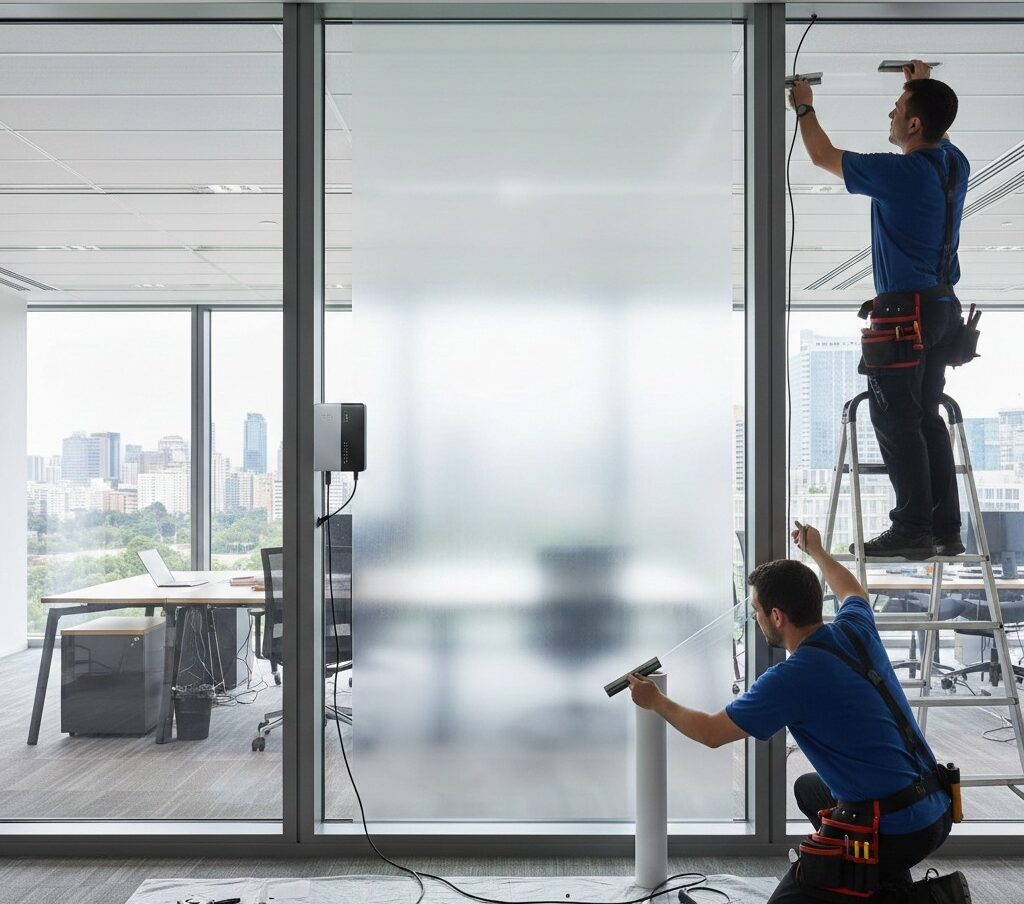
How smart film is installed in interiors
Installation quality has a direct impact on visual outcomes. Poor integration can undermine even the best design intent. Key considerations include:
- Concealed transformers and power supplies
- Clean edge detailing
- Coordination with joinery and wall systems
- Early electrical planning
When these elements are addressed early, smart film appears intentional rather than added.
Cost, Value, and Design ROI in Interior Applications
Is smart film worth it for modern interiors?
Upfront cost comparisons often focus narrowly on material pricing. A more accurate assessment considers:
- Reduced need for secondary systems
- Long-term visual consistency
- Lower maintenance compared to mechanical shading
- Spatial flexibility over time
In many cases, the value lies not in replacing a single product, but in simplifying the overall interior solution.
Addressing Market Skepticism and DIY Perception
DIY installations and poorly executed projects have contributed to hesitation within the design community. Visible wiring, uneven opacity, and edge defects can damage trust in the entire category.
This has reinforced an important distinction: smart film is not forgiving of shortcuts. In design-led interiors, execution quality defines acceptance.
Homeowners
Privacy without structural change
Architects & Designers
Controlled transparency as a design tool
Contractors & Installers
Clear coordination between trades
Offices & Facilities
Adaptable collaboration zones
Hospitality Operators
Enhanced guest experience without clutter
Healthcare Managers
Hygienic, fabric-free privacy solutions
Smart Film for Interior Applications
For clarity and informed specification, typical interior-grade smart film characteristics include:
- Visible Light Transmission (ON): ~75–85%
- Visible Light Transmission (OFF): ~5–10% (diffused)
- Switching Speed: 1 Second
- Typical Lifespan: 10–15 years (interior use)
- Power Consumption: Approx. 3–5 W/m² when transparent
Important clarifications:
- Smart film provides visual privacy, not acoustic insulation
- Proper installation is critical to long-term performance and appearance
Smart Film for Modern Interiors in Dubai
In design-led markets such as Dubai, smart film is increasingly considered during early concept stages rather than as a retrofit solution. Discussions typically focus on placement logic, haze tolerance, and integration—before finishes are locked in.
From our experience, the most successful outcomes occur when smart film in modern interiors is treated as part of the design language, not as an afterthought. At Keystone, we approach smart film as a material for spatial clarity and flexibility, helping design teams explore where it genuinely enhances interiors—without forcing it where it doesn’t belong.