Smart Film for Patient Privacy and Infection Control
Patient privacy and infection control are no longer optional in healthcare design—they are operational necessities. Hospitals, clinics, and diagnostic centers must protect patient dignity while enabling efficient clinical workflows and maintaining strict hygiene standards.
Hospital-acquired infections remain a global concern, affecting millions of patients each year and increasing treatment costs, staffing pressure, and recovery time. Many traditional privacy solutions were never designed to meet modern infection control requirements, creating avoidable risks in patient care areas.
Smart film for patient privacy is gaining attention because it addresses both challenges simultaneously. Rather than acting as a cosmetic upgrade, it supports contemporary healthcare design strategies focused on hygiene, efficiency, and patient-centered care—particularly in rapidly modernizing healthcare facilities across the UAE.
Privacy and Infection Challenges
Why Privacy Curtains Fall Short
Despite widespread use, traditional privacy curtains create multiple operational and hygiene issues:
- High-touch surfaces with inconsistent cleaning cycles
- Porous fabric that absorbs moisture and pathogens
- Frequent contact with beds, equipment, and staff
- Ongoing costs for laundering, replacement, and downtime
From an infection control perspective, fabric-based barriers conflict with modern hygiene standards that prioritize non-porous, easy-to-clean surfaces.
Privacy Gaps in Shared and High-Traffic Areas
In multi-bed wards and busy clinical zones, privacy failures are common:
- Accidental exposure in shared rooms
- Visual breaches during exams or procedures
- Unclear boundaries leading to unplanned room entry
These issues affect patient trust, comfort, and overall care experience—factors increasingly tied to healthcare quality metrics.
Balancing Visibility and Privacy
Clinical staff need uninterrupted visibility for monitoring and rapid response, especially in ICUs and emergency departments. Traditional solutions often force a compromise between patient dignity and clinical oversight, creating tension between care efficiency and privacy expectations.
What Is Smart Film in Healthcare?
Smart Film Explained
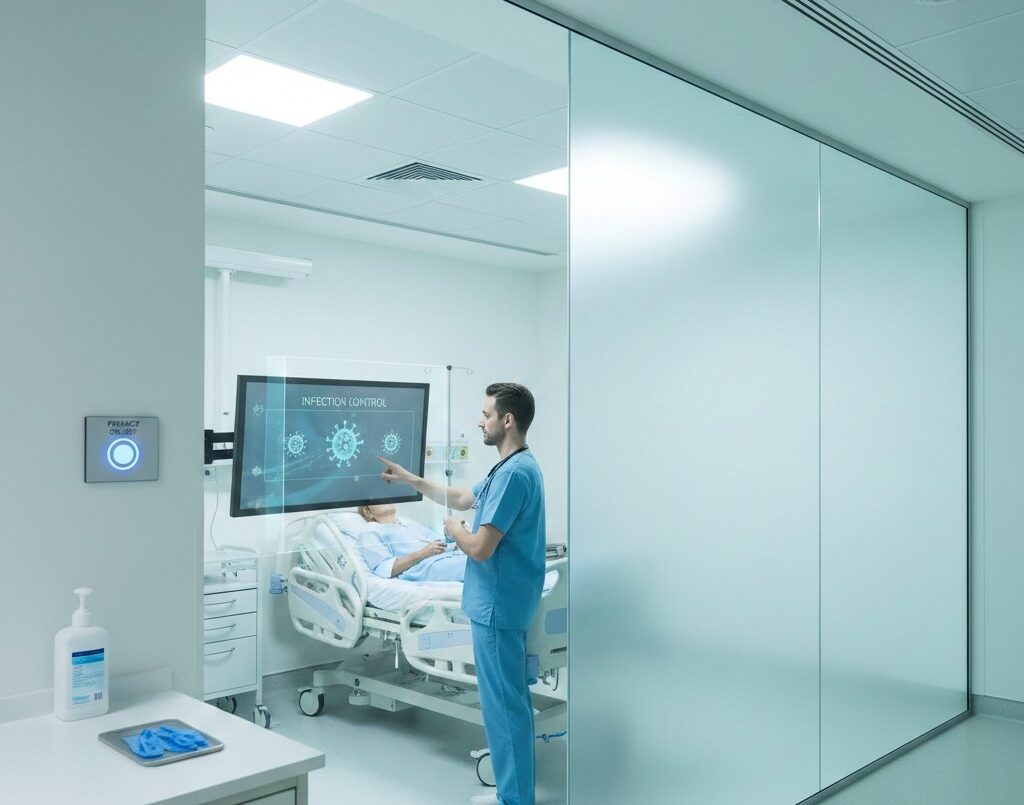
Smart film, also known as switchable film, is applied to glass surfaces and changes instantly between transparent and opaque states.
Key features include:
- On-demand switching via wall switch or control system
- Full visibility when required
- Immediate visual privacy without physical barriers
With no moving parts or manual handling, smart film is well suited for clinical environments.
Smart Film vs Switchable Glass
- Smart film can be retrofitted onto existing glass
- Switchable glass is typically installed during new construction
Both provide flexible privacy solutions for partitions, doors, and windows, but smart film offers greater adaptability in operational healthcare facilities.
How Smart Film Enhances Patient Privacy
Instant, Contact-Free Privacy
Smart film allows immediate privacy without physical interaction:
- No pulling or adjusting curtains
- No repeated hand contact
- Rapid response during exams or emergencies
This supports both hygiene and workflow efficiency.
Supporting Patient Dignity and Comfort
For patients, smart film provides:
- Visual privacy during vulnerable moments
- Reduced anxiety in shared rooms
- A greater sense of environmental control
These elements contribute directly to patient satisfaction and emotional well-being.
Smart Film and Infection Control
Reducing High-Touch Surfaces
Compared to curtains:
- Curtains are handled frequently throughout the day
- Smart film requires no physical contact
Reducing touchpoints aligns with infection prevention strategies focused on minimizing contamination risks.
Cleaning and Maintenance Benefits
From a facilities perspective, smart film offers:
- Smooth, non-porous surfaces
- Compatibility with hospital-grade disinfectants
- No laundering or fabric replacement cycles
This supports consistent hygiene protocols while lowering long-term maintenance demands.
Smart Film vs Privacy Curtains
Hygiene and Risk Comparison
- Fabric curtains retain moisture and contaminants
- Smart film remains sealed and easy to disinfect
The difference is especially critical in high-acuity care areas.
Privacy Reliability
Smart film provides:
- Consistent coverage without gaps
- No tearing, drifting, or misuse
- Predictable privacy performance
Reliability is essential for patient-facing environments.
Workflow Efficiency
Clinical staff benefit from:
- Faster room transitions
- Fewer interruptions
- Clear visual boundaries without physical effort
This improves daily operational flow.
Healthcare Applications
Patient Rooms and Shared Wards
Smart film enables:
- Individual privacy control
- Day/night visibility management
- Reduced visual clutter
ICUs and Emergency Departments
In critical care settings, smart film supports:
- Rapid switching during emergencies
- Continuous monitoring when needed
- Privacy without physical obstructions
Clinics and Diagnostic Centers
Common applications include:
- Imaging suites
- Consultation rooms
- Treatment and procedure areas
Cleanability and professional appearance are key advantages in these spaces.
Aligning Design, Workflow, and Operations
For Architects and Designers
Smart film integrates privacy directly into architectural elements while supporting patient-centered, evidence-based design.
For Contractors
Retrofit-friendly installation minimizes disruption in active healthcare environments.
For Facility Managers
Benefits include:
- Improved privacy and infection control
- Reduced maintenance burden
- Strong long-term value compared to temporary solutions
Long-Term Solution or Luxury Feature?
When evaluated beyond initial cost, smart film delivers:
- Long-term durability
- Consistent performance
- Scalability across departments
Healthcare privacy technology is increasingly viewed as core infrastructure rather than an optional upgrade.
The Future of Privacy in Healthcare Design
Healthcare environments are moving toward:
- Fewer fabric-based barriers
- Privacy integrated into architecture
- Smart materials that support hygiene and dignity
Smart film aligns directly with these priorities, especially in modern healthcare developments across the UAE.
Protecting Health and Dignity Together
Effective healthcare spaces must safeguard both physical health and personal dignity. Smart film unifies privacy, infection control, and operational efficiency in a single solution—reducing reliance on outdated, high-risk privacy methods.
As healthcare facilities modernize, smart film is increasingly evaluated as part of long-term design strategies focused on hygiene, performance, and patient trust.
FAQs: Smart Film in Healthcare
Yes. It is more hygienic, durable, and reliable because it requires no handling and does not absorb pathogens.
Yes. It can be installed on existing glass in operational hospitals, clinics, and diagnostic centers.
Yes. It allows rapid switching between visibility and privacy without physical barriers.
Upfront costs are higher, but reduced cleaning, replacement, and maintenance often make it more cost-effective long term.
As healthcare facilities evolve, choosing the right privacy solution depends on layout, workflows, and infection control priorities. Many hospitals and clinics in the UAE are beginning to assess smart film as part of broader design and operational planning, rather than as a standalone product. Solutions such as Keystone smartglass film are typically evaluated by first understanding how privacy, hygiene, and visibility interact within each care environment.