Modern luxury bathrooms are increasingly designed around openness, natural daylight, and clean architectural lines. Large windows, glass shower enclosures, and transparent partitions help create a bright and inviting atmosphere. However, these design features can also introduce privacy concerns, especially in urban neighborhoods, high-density residential areas, and hospitality settings.
Traditional solutions such as blinds for bathroom windows, curtains, shades, and frosted glass can address privacy needs, but they often come with trade-offs. Some reduce access to daylight, others require regular cleaning, and permanent privacy treatments limit flexibility.
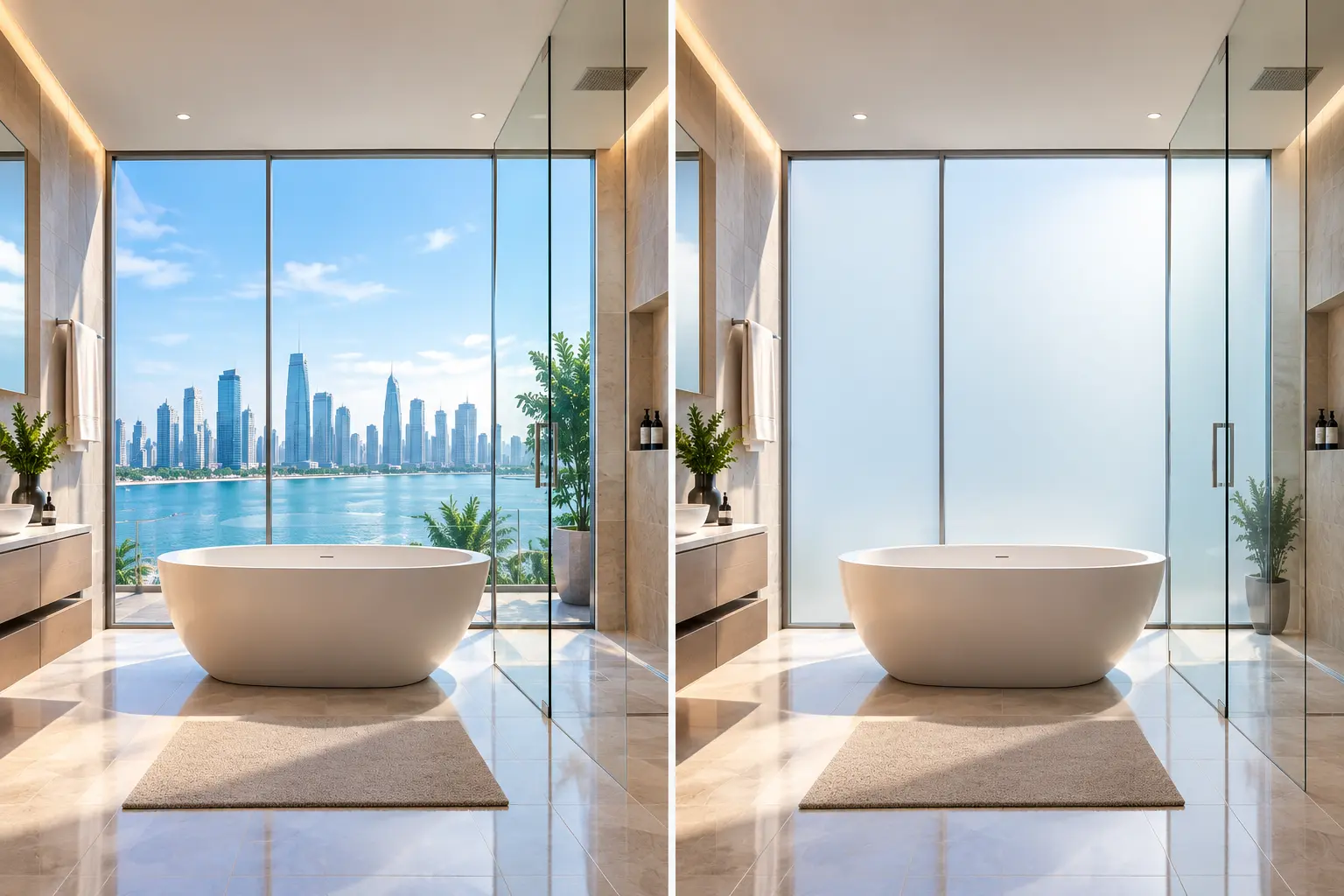
As a result, many homeowners, architects, designers, and facility managers are exploring smart film for bathroom privacy as a modern alternative. Smart film can transform existing glass into switchable privacy glass, allowing users to control visibility while maintaining a bright, open environment.
In this guide, we explain how the technology works, where it is commonly used, installation considerations, cost factors, and whether it may be the right fit for a luxury bathroom project.
What Is Smart Film for Bathroom Privacy?
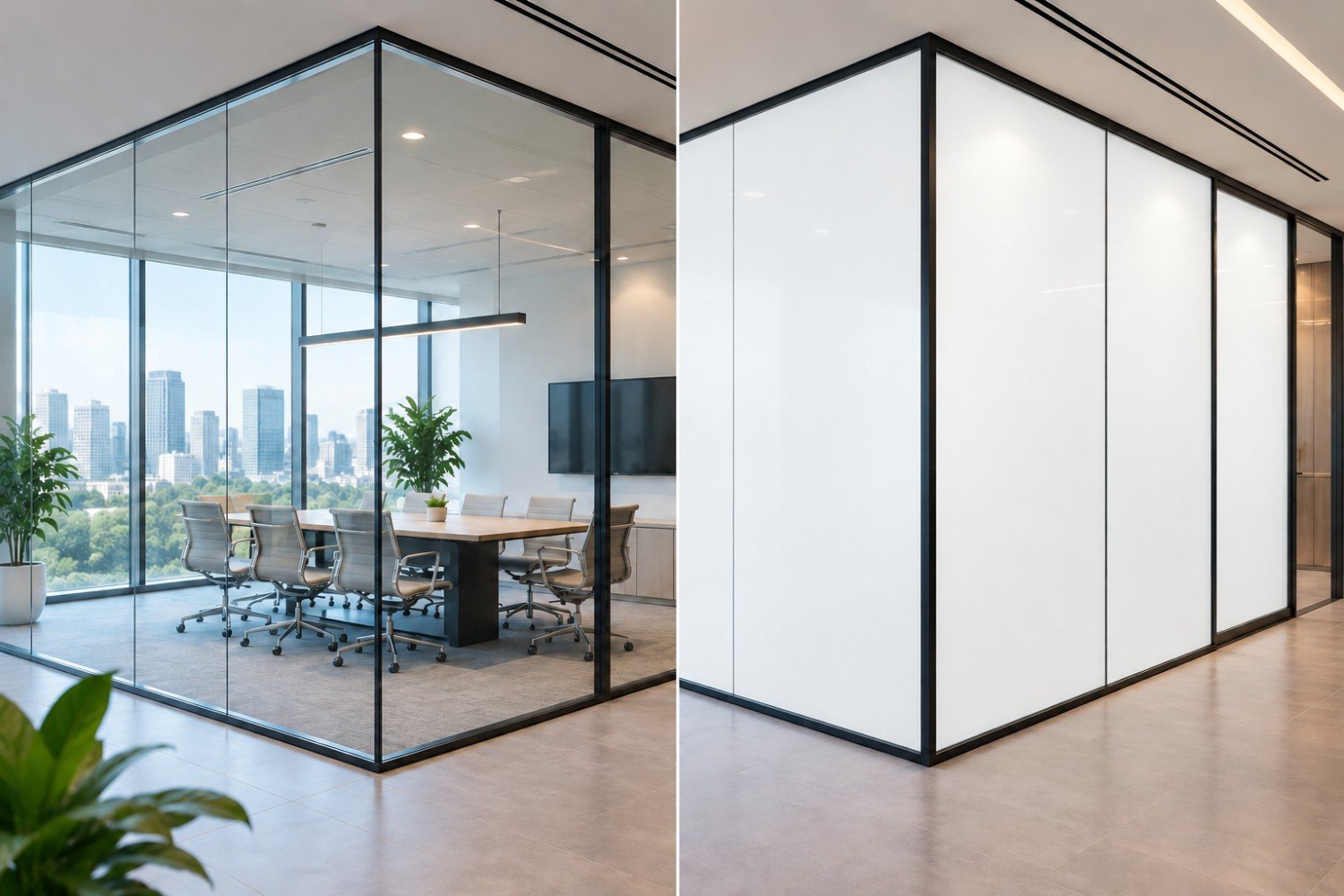
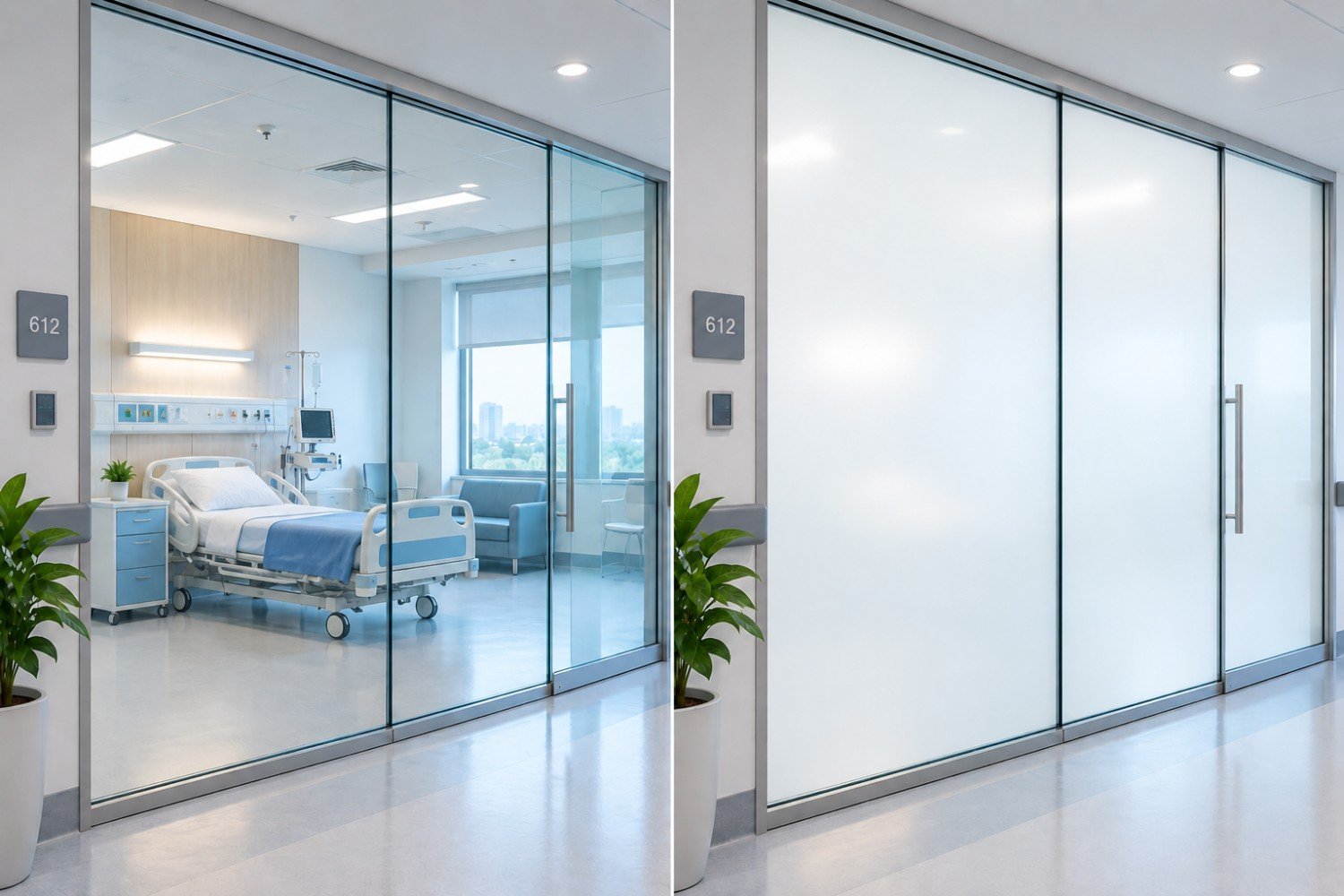
Smart privacy film is a specialized film applied to glass surfaces that can switch between transparent and opaque states when electrical current is applied. The most widely used technology is PDLC privacy film (Polymer Dispersed Liquid Crystal).
In its powered state, liquid crystals align to allow visibility through the glass. When power is removed, the crystals scatter light, creating a frosted appearance that limits visibility.
What Is PDLC Smart Film?
PDLC smart film is designed to provide on-demand privacy without permanently altering the appearance of glass. Unlike traditional window coverings, it allows the same glass surface to serve multiple purposes throughout the day.
Because it can be installed on existing glass, PDLC privacy film is frequently selected for renovation projects where replacing glass would be costly or disruptive.
How Is Smart Film Different From Smart Glass?
Although the terms are often used interchangeably, there are important differences.
Smart film is applied directly to existing glass surfaces, making it a practical retrofit solution. Smart glass incorporates privacy technology directly into the glass during manufacturing and is typically specified during new construction.
For many bathroom renovations, smart film offers a more accessible way to achieve a smart glass bathroom window effect without replacing the glazing system.
How Does Smart Film Work in a Bathroom Environment?
PDLC technology works by controlling the alignment of microscopic liquid crystals embedded within the film layer.
How PDLC Technology Creates Privacy on Demand
When electrical current is applied, the liquid crystals align, allowing light and visibility through the glass. When power is removed, the crystals disperse and scatter light, producing an opaque appearance.
Transparent vs Opaque Modes Explained
The film can switch between states in a fraction of a second. This allows users to control visibility as privacy needs change throughout the day.
What Happens When Power Is Applied?
Power activates the transparent state. Without power, most PDLC systems return to their opaque privacy mode.
Does Smart Film Block Natural Light?
No. While the film changes visibility, it still allows significant amounts of natural daylight to pass through the glass. This helps maintain bright interiors without relying solely on artificial lighting.
Does Smart Film Work in Humid Bathrooms?
Generally, yes. PDLC smart film is commonly used in bathrooms and other humid environments when professionally installed and properly sealed.
However, smart film should not be described as fully waterproof. Installation quality, edge sealing, electrical protection, and environmental conditions all play important roles in long-term performance.
Why Natural Light and Privacy Are Essential in Luxury Bathroom Design
Modern bathroom design increasingly focuses on wellness, comfort, and visual openness.
The Growing Trend Toward Open and Light-Filled Bathrooms
Many contemporary homes and hospitality projects feature larger windows, frameless glass enclosures, and open layouts that maximize daylight.
Why Natural Light Improves Bathroom Comfort and Ambiance
Natural light can
- Make spaces feel larger
- Improve visual comfort
- Enhance material finishes
- Reduce dependence on artificial lighting during the day
Common Bathroom Privacy Challenges
Common concerns include:
- Street-facing bathroom windows
- Nearby buildings
- Open-concept ensuite layouts
- Glass shower partitions
Why Traditional Privacy Solutions Often Fall Short
While blinds, curtains, and permanent privacy glass remain popular, they may not provide the same combination of visibility control, aesthetics, and adaptability that luxury projects often require.
Benefits of Smart Film for Luxury Bathrooms
Privacy Without Sacrificing Natural Light
One of the primary advantages of switchable privacy glass bathroom systems is their ability to balance visibility control with daylight access.
Creates a Larger and More Open Feel
Removing bulky window treatments can help preserve clean sightlines and contribute to a more spacious appearance.
Supports Modern and Minimalist Designs
Smart film aligns well with contemporary design trends that emphasize simplicity, clean surfaces, and architectural glass.
Creates a High-End User Experience
In many luxury residential and hospitality projects, switchable glass technology contributes to a sophisticated and modern environment.
Enhances Smart Home Functionality
Many systems can integrate with home automation platforms, wall switches, mobile applications, and sensor-based controls.
Improves Guest Experiences
Hotels, wellness facilities, and luxury residences often use electric privacy glass to create a more customized and memorable user experience.
Benefits of Using Frosted Glass Partitions in Bathrooms
Frosted glass remains a widely used bathroom privacy glass solution.
Advantages of Frosted Glass
- Consistent privacy
- Decorative appearance
- Light diffusion
- No electrical requirements
Limitations of Frosted Glass
- Permanent obscured visibility
- Limited flexibility
- No user control
When Smart Film May Be a Better Choice
Smart film may be preferable when occupants want the option to switch between privacy and transparency throughout the day.
Smart Film vs Traditional Bathroom Privacy Solutions
|
Feature |
Smart Film |
Frosted Glass |
Blinds |
Curtains |
|---|---|---|---|---|
|
Privacy Control |
On-demand |
Permanent |
Adjustable |
Adjustable |
|
Natural Light Transmission |
High |
Moderate to High |
Reduced when closed |
Reduced when closed |
|
Aesthetics |
Modern and minimalist |
Clean appearance |
Visible hardware |
Fabric-based |
|
Maintenance |
Low |
Low |
Moderate |
Moderate to High |
|
Flexibility |
High |
Low |
Moderate |
Moderate |
|
Smart Home Compatibility |
Yes |
No |
Limited |
No |
|
Long-Term Value |
High |
Moderate |
Moderate |
Moderate |
Luxury Bathroom Applications for Smart Film
Smart film can be incorporated into a variety of luxury bathroom designs.
Bathroom Window Privacy Solutions
Exterior-facing windows can benefit from adjustable privacy while preserving daylight.
Smart Film for Shower Enclosures
Smart film can create temporary visual separation without permanently obscuring the glass.
Glass Bathroom Partitions
Open-concept bathroom layouts often use switchable partitions to balance openness and privacy.
Skylights and Wellness Spaces
Select applications use smart film to enhance light management and privacy.
Hotel and Resort Bathrooms
Hospitality operators increasingly use switchable glass technologies to elevate guest accommodations.
Luxury Residential Renovations
Many renovation projects use smart film to upgrade existing glass without major structural changes.
Smart Home Integration and Automated Privacy Control
Modern systems can support:
- Voice-controlled privacy settings
- Smartphone and app-based operation
- Occupancy sensor activation
- Door-triggered privacy modes
- Scheduled automation routines
In recent projects, we have seen growing interest in automation scenarios that automatically adjust privacy based on occupancy or time of day.
Smart Film Installation Considerations
Can Smart Film Be Installed on Existing Glass?
Yes. Retrofitting existing glass is one of the most common applications.
Retrofit vs New Construction Installations
Retrofits typically use film applied to existing glazing, while new construction projects may specify integrated smart glass systems.
Electrical and Wiring Requirements
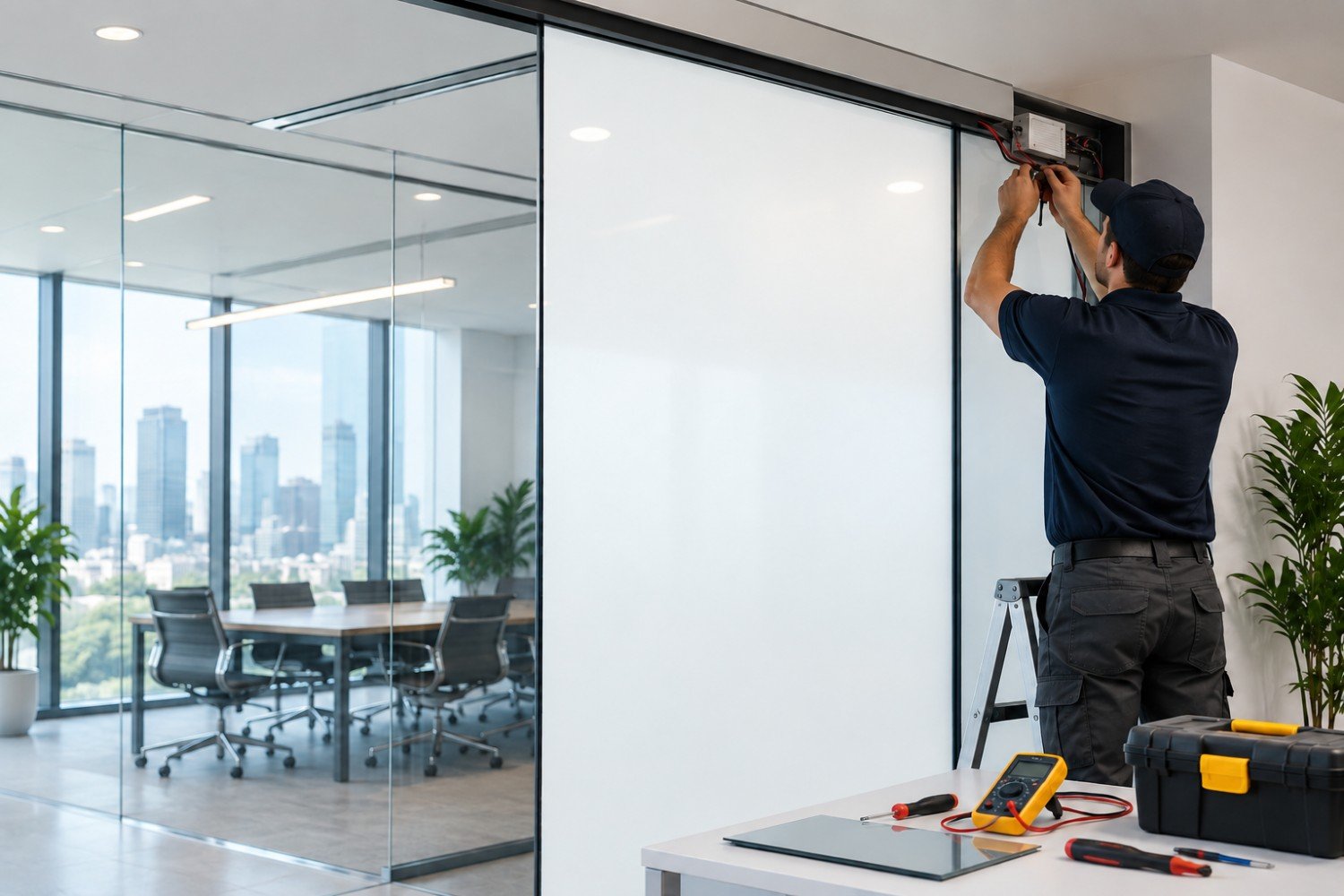
Every installation requires planning for power supplies, wiring paths, transformer locations, and control systems.
Bathroom Safety and Moisture Considerations
Bathrooms require special attention to electrical routing, edge sealing, and environmental protection.
Design Considerations for Architects
Early planning can help conceal wiring and ensure the technology integrates cleanly into the overall design.
How Much Does Smart Film Cost?
Smart film is considered a premium architectural technology, and pricing varies significantly by project.
Factors That Influence Smart Film Costs
Key cost drivers include:
- Glass size and dimensions
- PDLC film specifications
- Electrical and wiring requirements
- Installation complexity
- Automation and control options
- Custom fabrication requirements
Typical Cost Ranges
In many markets, professionally installed smart film systems can range from approximately $50 to $150+ per square foot, although pricing varies based on project scope, location, and product specifications.
Smart Film vs Traditional Privacy Solution Costs
Smart film typically requires a higher upfront investment than blinds, curtains, or frosted glass. However, it offers capabilities those solutions cannot provide, including dynamic privacy control and smart-home integration.
Long-Term Value and ROI Considerations
Property owners often evaluate value based on:
- Improved functionality
- Reduced need for window coverings
- Modernized appearance
- Enhanced user experience
- Potential appeal in luxury real estate markets
Can Smart Film Increase Property Appeal?
While outcomes vary, advanced architectural technologies are often viewed as premium features in high-end residential and hospitality environments.
Is Smart Film the Right Solution for Your Bathroom?
Smart film for bathroom privacy offers a modern approach to managing visibility without relying on traditional bathroom window coverings. By combining adaptable privacy, contemporary aesthetics, and compatibility with smart-home systems, it provides an alternative to frosted glass, blinds, and curtains for many luxury bathroom projects.
Whether you are planning a residential renovation, designing a hospitality space, or evaluating bathroom privacy solutions for a commercial facility, understanding the technology, installation requirements, and long-term considerations can help determine whether smart film aligns with your project goals.
Frequently Asked Questions
No. It changes visibility while still allowing daylight to enter the space.
Smart film is generally suitable for humid environments when professionally installed and properly sealed, but it should not be considered fully waterproof.
Yes, in many cases, provided installation requirements and environmental conditions are properly addressed.
It depends on project goals. Smart film offers switchable privacy, while frosted glass provides permanent privacy.
Yes. Many systems integrate with automation platforms and smart controls.
Most PDLC systems become opaque.
Yes. It is commonly used on bathroom windows where privacy and daylight access are both priorities.
Most systems switch in less than a second.
Routine maintenance is typically limited to normal glass cleaning and periodic inspection of electrical components.