
Smart Film for Patient Privacy and Infection Control
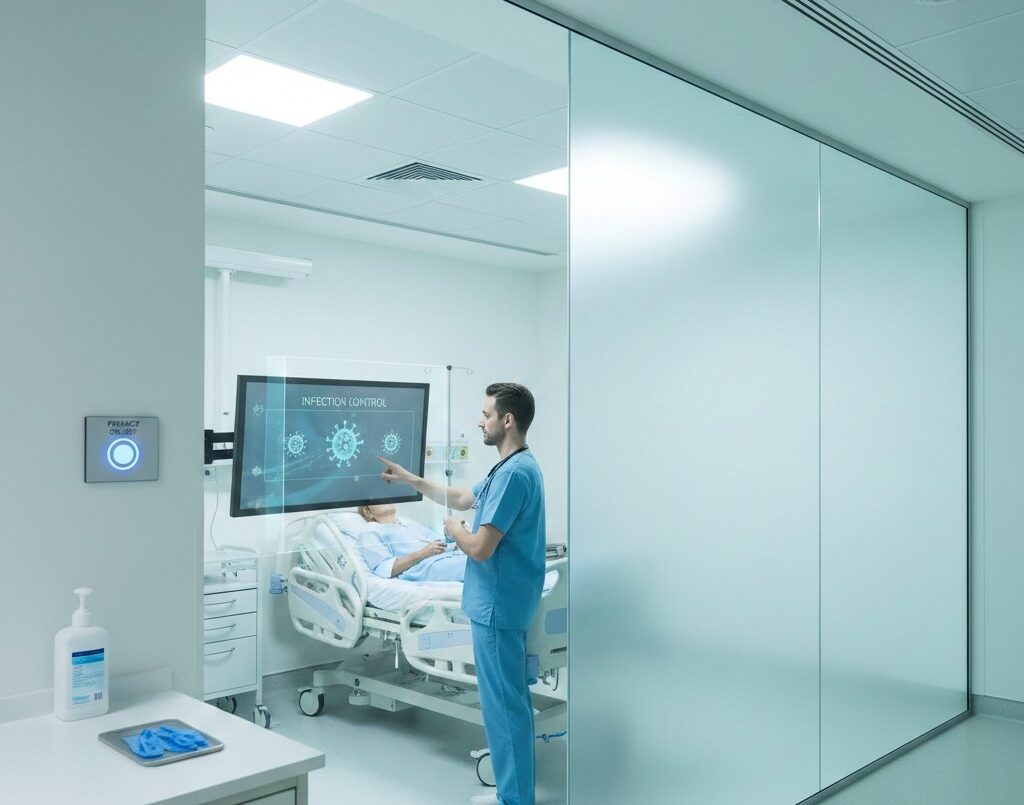
Blog Table of Contents Smart Film for Patient Privacy and Infection Control Patient privacy and infection control are no longer optional in healthcare design—they are operational necessities. Hospitals, clinics, and diagnostic centers must protect patient dignity while enabling efficient clinical workflows and maintaining strict hygiene standards. Hospital-acquired infections remain a global concern, affecting millions of patients each year and increasing treatment costs, staffing pressure, and recovery time. Many traditional privacy solutions were never designed to meet modern infection control requirements, creating avoidable risks in patient care areas. Smart film for patient privacy is gaining attention because it addresses both challenges simultaneously. Rather than acting as a cosmetic upgrade, it supports contemporary healthcare design strategies focused on hygiene, efficiency, and patient-centered care—particularly in rapidly modernizing healthcare facilities across the UAE. Privacy and Infection Challenges Why Privacy Curtains Fall Short Despite widespread use, traditional privacy curtains create multiple operational and hygiene issues: High-touch surfaces with inconsistent cleaning cycles Porous fabric that absorbs moisture and pathogens Frequent contact with beds, equipment, and staff Ongoing costs for laundering, replacement, and downtime From an infection control perspective, fabric-based barriers conflict with modern hygiene standards that prioritize non-porous, easy-to-clean surfaces. Privacy Gaps in Shared and High-Traffic Areas In multi-bed wards and busy clinical zones, privacy failures are common: Accidental exposure in shared rooms Visual breaches during exams or procedures Unclear boundaries leading to unplanned room entry These issues affect patient trust, comfort, and overall care experience—factors increasingly tied to healthcare quality metrics. Balancing Visibility and Privacy Clinical staff need uninterrupted visibility for monitoring and rapid response, especially in ICUs and emergency departments. Traditional solutions often force a compromise between patient dignity and clinical oversight, creating tension between care efficiency and privacy expectations. What Is Smart Film in Healthcare? Smart Film Explained Smart film, also known as switchable film, is applied to glass surfaces and changes instantly between transparent and opaque states.Key features include: On-demand switching via wall switch or control system Full visibility when required Immediate visual privacy without physical barriers With no moving parts or manual handling, smart film is well suited for clinical environments. Smart Film vs Switchable Glass Smart film can be retrofitted onto existing glass Switchable glass is typically installed during new construction Both provide flexible privacy solutions for partitions, doors, and windows, but smart film offers greater adaptability in operational healthcare facilities. How Smart Film Enhances Patient Privacy Instant, Contact-Free Privacy Smart film allows immediate privacy without physical interaction: No pulling or adjusting curtains No repeated hand contact Rapid response during exams or emergencies This supports both hygiene and workflow efficiency. Supporting Patient Dignity and Comfort For patients, smart film provides: Visual privacy during vulnerable moments Reduced anxiety in shared rooms A greater sense of environmental control These elements contribute directly to patient satisfaction and emotional well-being. Smart Film and Infection Control Reducing High-Touch Surfaces Compared to curtains: Curtains are handled frequently throughout the day Smart film requires no physical contact Reducing touchpoints aligns with infection prevention strategies focused on minimizing contamination risks. Cleaning and Maintenance Benefits From a facilities perspective, smart film offers: Smooth, non-porous surfaces Compatibility with hospital-grade disinfectants No laundering or fabric replacement cycles This supports consistent hygiene protocols while lowering long-term maintenance demands. Smart Film vs Privacy Curtains Hygiene and Risk Comparison Fabric curtains retain moisture and contaminants Smart film remains sealed and easy to disinfect The difference is especially critical in high-acuity care areas. Privacy Reliability Smart film provides: Consistent coverage without gaps No tearing, drifting, or misuse Predictable privacy performance Reliability is essential for patient-facing environments. Workflow Efficiency Clinical staff benefit from: Faster room transitions Fewer interruptions Clear visual boundaries without physical effort This improves daily operational flow. Healthcare Applications Patient Rooms and Shared Wards Smart film enables: Individual privacy control Day/night visibility management Reduced visual clutter ICUs and Emergency Departments In critical care settings, smart film supports: Rapid switching during emergencies Continuous monitoring when needed Privacy without physical obstructions Clinics and Diagnostic Centers Common applications include: Imaging suites Consultation rooms Treatment and procedure areas Cleanability and professional appearance are key advantages in these spaces. Aligning Design, Workflow, and Operations For Architects and Designers Smart film integrates privacy directly into architectural elements while supporting patient-centered, evidence-based design. For Contractors Retrofit-friendly installation minimizes disruption in active healthcare environments. For Facility Managers Benefits include: Improved privacy and infection control Reduced maintenance burden Strong long-term value compared to temporary solutions Long-Term Solution or Luxury Feature? When evaluated beyond initial cost, smart film delivers: Long-term durability Consistent performance Scalability across departments Healthcare privacy technology is increasingly viewed as core infrastructure rather than an optional upgrade. The Future of Privacy in Healthcare Design Healthcare environments are moving toward: Fewer fabric-based barriers Privacy integrated into architecture Smart materials that support hygiene and dignity Smart film aligns directly with these priorities, especially in modern healthcare developments across the UAE. Protecting Health and Dignity Together Effective healthcare spaces must safeguard both physical health and personal dignity. Smart film unifies privacy, infection control, and operational efficiency in a single solution—reducing reliance on outdated, high-risk privacy methods. As healthcare facilities modernize, smart film is increasingly evaluated as part of long-term design strategies focused on hygiene, performance, and patient trust. FAQs: Smart Film in Healthcare Is smart film better than privacy curtains? Yes. It is more hygienic, durable, and reliable because it requires no handling and does not absorb pathogens. Can smart film be retrofitted in existing hospitals? Yes. It can be installed on existing glass in operational hospitals, clinics, and diagnostic centers. Is smart film suitable for ICUs and ERs? Yes. It allows rapid switching between visibility and privacy without physical barriers. Is smart privacy glass expensive compared to curtains? Upfront costs are higher, but reduced cleaning, replacement, and maintenance often make it more cost-effective long term. As healthcare facilities evolve, choosing the right privacy solution depends on layout, workflows, and infection control priorities. Many hospitals and clinics in the UAE are beginning to assess smart film as part of broader design and operational
Smart Film in Modern Interiors
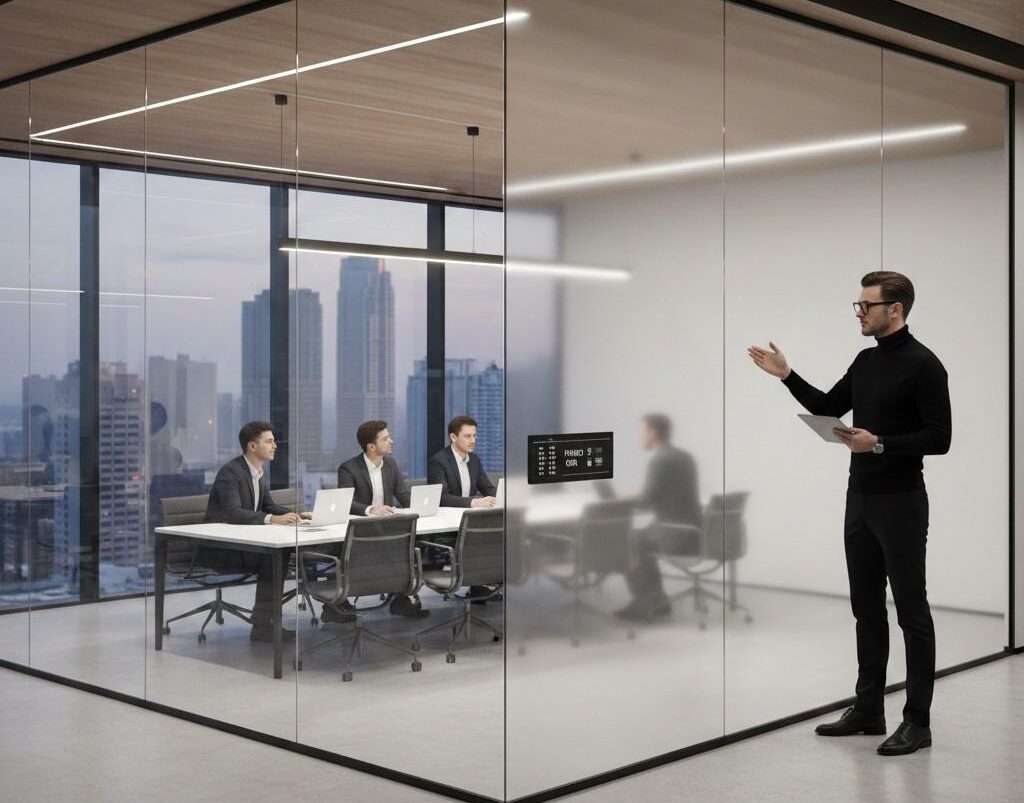
Blog Table of Contents Smart Film in Modern Interiors Smart film in modern interiors is no longer treated as a novelty or a short-lived trend. Across residential, workplace, hospitality, and healthcare environments, it is increasingly being evaluated as a legitimate interior material—one that responds to how spaces are actually used. Open-plan layouts, expansive glazing, and minimal interior architecture have reshaped expectations around light, transparency, and visual openness. At the same time, these design choices introduce practical challenges around privacy, zoning, and adaptability. Traditional solutions such as curtains, blinds, or permanently frosted glass often undermine clean lines, interrupt sightlines, or dilute the architectural intent. Smart film has re-entered the design conversation not as a replacement for glass, but as a way to allow glass to remain central—while making it more responsive. That said, skepticism remains. Questions about cloudiness, durability, and long-term performance are valid, particularly in premium interiors where visual quality and longevity matter. Understanding where smart film fits—and where it does not—is essential for using it well. The Role of Smart Film in Modern Interior Design Smart glass interior design has matured in how it is specified and discussed. Designers are moving away from technical descriptions of voltage or switching systems and focusing instead on how the material behaves within a space—how it handles light, depth, and visual continuity. Smart Film as a Design Material, Not a Technology PDLC smart film interiors are best understood through their visual and spatial impact: Glass shifts between transparent and diffused states Transparency becomes adjustable rather than fixed Spaces gain flexibility without additional layers or hardware This reframing is important. Many architects are cautious about technology-forward materials because interiors must age well visually. When smart film is positioned as a transformation of glass rather than an added device, it becomes easier to evaluate alongside finishes like stone, metal, or timber. Where Smart Film Fits in Contemporary Interior Architecture Placement clarity is critical for success. Smart film performs best when its role is clearly defined within the design strategy: Smart film interior partitions for adaptable zoning Windows where privacy is occasional rather than constant Feature glazing that supports openness without exposure In these applications, switchable glass interiors allow designers to manage visibility without introducing visual clutter or mechanical systems. Interior Design Trends Driving Smart Film Adoption Interior design trends using switchable glass are being shaped more by lifestyle patterns than by technology adoption. Flexibility, visual calm, and spatial efficiency are driving interest. Open-Plan Living Without Visual Exposure Modern interiors increasingly prioritise openness, but few occupants want constant visibility. Smart privacy glass for interiors allows spaces to remain visually connected while offering control when needed. Transparency and discretion no longer have to compete. Minimal Interiors and the Removal of Visual Clutter One of the strongest drivers behind smart film adoption is the desire to remove soft furnishings and surface add-ons from glass: No curtains interrupting light No blinds breaking vertical lines No permanent frosting reducing clarity In professional environments such as clinics or studios, this also supports a cleaner, more hygienic aesthetic. Flexible Spaces for Modern Lifestyles As homes and workplaces evolve, rooms are expected to serve multiple functions. Switchable glass interior design supports: Work-from-home privacy Entertaining without permanent walls Adaptable meeting or consultation spaces All without structural changes or visual heaviness. Read: smart film for hospitality interiors Smart Film vs Traditional Interior Privacy Solutions Smart Film vs Blinds and Curtains Blinds and curtains introduce visual interruption and ongoing maintenance. They also tend to age faster than surrounding finishes. Smart glass partitions for offices and homes maintain architectural continuity while offering instant privacy when required. Smart Film vs Frosted or Acid-Etched Glass Permanent frosting fixes a space into a single visual state. Switchable glass interiors, by contrast, allow transparency and privacy to coexist. This reversibility is especially valuable in hospitality and high-end residential interiors where spatial depth is part of the experience. Clarity, Cloudiness, and Design Acceptance Does smart film look cloudy? This is one of the most common questions we hear. Smart film introduces a diffused state when switched off, which softens light and obscures detail. In many interiors, this diffusion is perceived as a feature. In ultra-minimal or high-gloss spaces, however, even slight haze can be noticeable. The key is alignment between expectation and specification. Reviewing samples in context—against actual glazing and lighting conditions—helps designers determine whether the visual quality meets the project’s standards. Durability, Lifespan, and Long-Term Interior Reliability How long does smart film last in interior spaces? Smart film durability for interior use depends on product quality, installation standards, and operating conditions. When properly specified and installed, smart film is designed for long-term interior applications rather than short-term use. Interior designers are right to consider replacement risk, particularly in finished spaces. This is why supplier track record and integration planning matter as much as the film itself. Installation and Integration How smart film is installed in interiors Installation quality has a direct impact on visual outcomes. Poor integration can undermine even the best design intent. Key considerations include: Concealed transformers and power supplies Clean edge detailing Coordination with joinery and wall systems Early electrical planning When these elements are addressed early, smart film appears intentional rather than added. Cost, Value, and Design ROI in Interior Applications Is smart film worth it for modern interiors? Upfront cost comparisons often focus narrowly on material pricing. A more accurate assessment considers: Reduced need for secondary systems Long-term visual consistency Lower maintenance compared to mechanical shading Spatial flexibility over time In many cases, the value lies not in replacing a single product, but in simplifying the overall interior solution. Addressing Market Skepticism and DIY Perception DIY installations and poorly executed projects have contributed to hesitation within the design community. Visible wiring, uneven opacity, and edge defects can damage trust in the entire category. This has reinforced an important distinction: smart film is not forgiving of shortcuts. In design-led interiors, execution quality defines acceptance. Homeowners Privacy without structural change Architects & Designers Controlled transparency as a
Boost Security and Safety with Smartglass Solutions
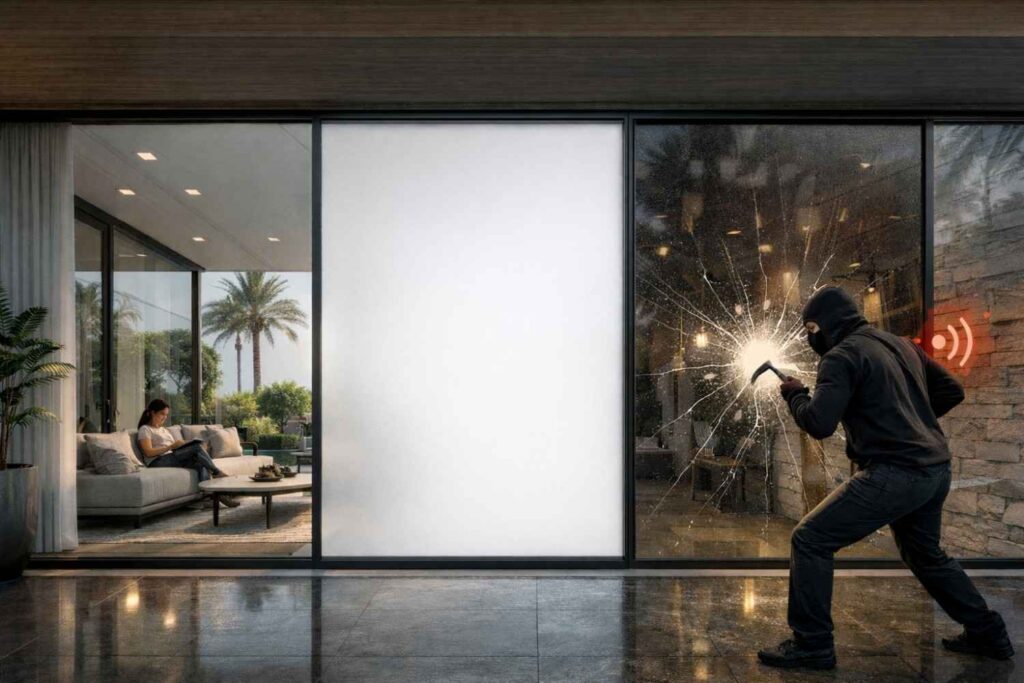
Blog Table of Contents Boost Security and Safety with Smartglass Solutions Modern buildings rely heavily on glass—but transparency comes with trade-offs. In our work with homeowners, architects, and facility managers across the UAE, a recurring challenge is clear: how to maintain openness without increasing security risk. Smart glass security solutions address this by combining privacy control, impact safety, and visual protection into one adaptable system that supports both design intent and real-world security needs. Why Security and Safety Are Now Core Design Priorities Glass-forward architecture is now standard across residential, commercial, hospitality, and healthcare spaces in the UAE. While this enhances daylight and visual appeal, it also introduces vulnerabilities. Increased visibility into interiors, greater perceived exposure to break-ins, and street-facing layouts in villas, apartments, and offices all contribute to growing safety concerns. Traditional privacy options such as blinds, curtains, and frosted glass tend to solve one problem while creating others. They block light, require frequent adjustment, or permanently obscure views. The challenge today is finding solutions that preserve openness and comfort while improving security and control—without adding operational complexity. What Makes Smart Glass a Security-First Solution How Smart Glass Works Smart glass film uses PDLC (Polymer Dispersed Liquid Crystal) technology to switch between clear and opaque states. When powered, the glass remains transparent; when switched off, it becomes opaque instantly. This allows visibility to be controlled in real time, rather than relying on fixed or mechanical privacy solutions. Privacy Control as a Security Feature In many buildings, visibility is the first security weakness. Smart glass reduces this risk by limiting what outsiders can see without permanently closing off spaces. Interior views can be blocked when needed, valuables are less visible to passersby, and street-facing rooms gain privacy without losing daylight. This makes smart glass for privacy and security UAE projects particularly relevant in high-traffic or densely built environments. Safety vs Security: How Smart Glass Addresses Both Smart glass is not just about visual control. When combined with laminated glass, it contributes to switchable glass safety by reducing injury risk during breakage while also discouraging intrusion through reduced visibility. Instead of treating safety and security as separate systems, smart glass allows both to function together as part of a unified approach. Shatter Resistance and Impact Safety in Smart Glass How Smart Glass Handles Impact and Breakage Smart glass film is typically used with laminated glass assemblies. In the event of impact, the glass may crack, but fragments remain bonded to the interlayer. Sharp shards are minimized, and the opening often stays partially intact. This performance is consistent with architectural safety glass used in vehicles and public buildings. Injury Prevention in Residential and Commercial Spaces The safety benefits are most apparent in environments where accidental impact or public interaction is common. Schools, healthcare facilities, and hospitality spaces all benefit from reduced glass fallout, lowering the risk of injury during accidents or acts of vandalism. Is Switchable Glass Impact Resistant? A common question is whether switchable glass is inherently stronger. Smart glass itself is not bulletproof, and impact resistance depends on the laminated glass specification. However, compared to standard float glass, laminated smart glass performs significantly better. When properly specified, switchable glass is impact resistant and aligned with modern safety standards. Privacy and Protection for Street-Facing Glass Smart Glass for Home Security in the UAE For villas, apartments, and ground-floor units, smart glass for home security offers a practical alternative to blinds or frosting. Privacy can be activated instantly, clear views remain available when desired, and daylight is preserved. This directly addresses concerns around how smart glass improves home security without making living spaces feel closed or defensive. Managing Visibility in Tall Windows and Open Facades Large glass panels and double-height facades are difficult to manage with curtains or films. Smart glass delivers uniform opacity across tall glazing, maintains clean aesthetics without mechanical systems, and offers better long-term appearance compared to traditional window films. Instant Privacy During Security Incidents In unexpected situations—such as nighttime exposure, deliveries, or sudden activity—one-touch opacity provides immediate visual control. This responsiveness is difficult to achieve with manual privacy solutions. Smart Glass vs Traditional Privacy Solutions Smart Glass vs Frosted Glass for Security When comparing smart glass vs frosted glass for security, flexibility is the key difference. Frosted glass is permanently opaque, while smart glass allows dynamic switching. Visual quality is more consistent, and spaces remain adaptable rather than fixed. Smart Glass vs Blinds and Curtains Blinds and curtains require ongoing adjustment, block light when privacy is needed, and introduce wear over time. Smart glass removes mechanical components entirely, simplifying use and reducing maintenance. Smart Glass vs Window Films Lower-quality films often suffer from uneven appearance, peeling, and limited lifespan. Professionally installed smart glass film offers superior durability and long-term visual consistency. Real Comfort Advantage: Daylight Without Heat Smartglass eliminates the trade-off between cooling efficiency and natural light. Rooms stay bright and comfortable—without overheating or relying on blackout blinds. Use Cases Across Buildings and Industries Residential Homes and Villas Privacy glass for homes is commonly used for street-facing windows, boundary walls, and internal partitions where flexibility is essential. Offices and Commercial Buildings Smart glass for buildings is widely adopted in meeting rooms, reception areas, and glass facades that require adaptable privacy without visual clutter. Hospitality and Retail Environments Hotels and retail spaces benefit from guest privacy without heavy drapery and from storefront visibility that can be adjusted throughout the day. Healthcare and Education Facilities In these settings, smart glass supports patient privacy, hygienic surfaces, and compliance with safety requirements. Durability, Lifespan, and Reliability of Smart Glass Long-Term Performance of Switching Technology Modern smart glass film is designed for high switching-cycle durability, stable performance over years of use, and minimal visual degradation. What Happens During Power Failure? In most installations, the glass defaults to an opaque state during power loss. Privacy is maintained, and no additional safety risk is introduced—often a preferred fail-safe condition. Environmental Performance in UAE Conditions For smart glass windows UAE projects,
How to retrofit smart film on existing windows
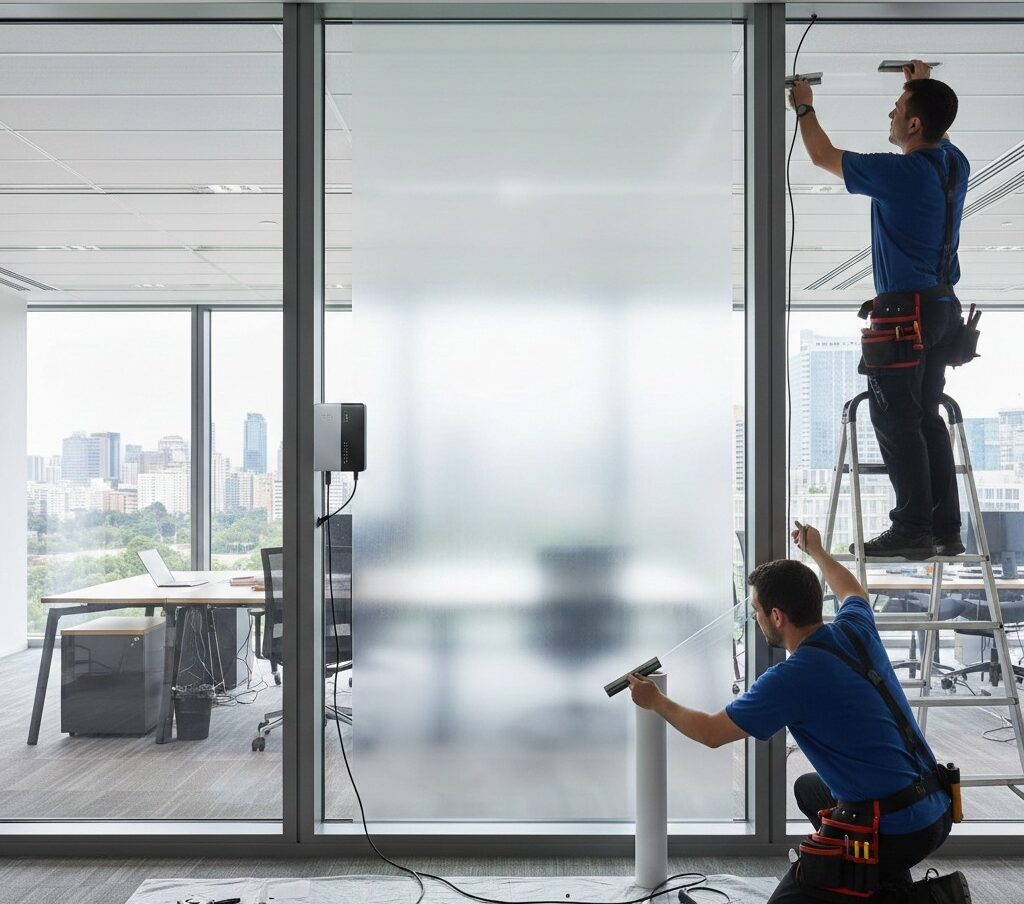
Blog Table of Contents How to Retrofit Smart Film on Existing Windows Retrofitting smart film onto existing windows and doors is a practical way to upgrade privacy, light control, and interior flexibility without replacing glass. In this guide, we explain how to retrofit smart film on existing windows, based on real installation experience across residential, commercial, and hospitality spaces. Smart Film Retrofitting Smart film retrofitting refers to applying self-adhesive PDLC smart film directly onto existing glass surfaces. Unlike full smart glass replacement, retrofitting works with what’s already installed, making it faster, cleaner, and far more cost-effective. Smart Film vs Smart Glass Smart film retrofit Applied to existing glass, minimal disruption, lower cost Smart glass replacement Existing glass removed and replaced with laminated switchable glass For most retrofit projects, smart film is the preferred solution. Why Smart Film Enables Renovation Smart film installs on the interior side of glass and requires: No glass removal No frame modification No structural changes This makes it ideal for occupied spaces. Windows, Doors, and Glass Partitions as Retrofit Targets Smart film works well on: Windows and sliding doors Shower glass Office partitions and meeting rooms Interior glass walls Existing Glass Compatibility Not every glass surface is suitable. A proper assessment prevents long-term issues. Ideal Glass Conditions for Retrofit Applications Smooth, flat, non-textured glass Clean, intact seals Structurally sound frames Interior-facing glass (recommended) Situations Where Retrofit Is Not Recommended Aged or failing seals Uneven, frosted, or patterned glass Cracked panes or loose frames Smart Film Retrofit Options Explained PDLC Smart Film as a True Retrofit Solution This is the most common retrofit method: Pressure-sensitive adhesive Applied directly to existing glass Electrically switchable between clear and opaque Switchable Laminated Glass as a Replacement Alternative Used only when: Glass is damaged Regulations require laminated solutions Retrofit film is not feasible Tools Required for Smart Film Retrofit Essential Installation Tools Spray bottle (installation solution) Squeegee Utility knife Measuring tape Measuring tape Lint-free wipes Electrical Components Step-down transformer Manual switch or smart controller Concealed wiring accessories Adhesives and Sealants Used in Retrofit Projects Neutral-cure silicone (mandatory for edge sealing) Smart Film Retrofit Process Surface Preparation and Dust Control Glass must be: Thoroughly cleaned Free of dust, grease, and residue Dust is the most common retrofit failure point. Measuring and Dry Fitting the Film We always dry-fit before peeling the liner to confirm: Correct sizing Busbar alignment Cable exit positioning Achieving Proper Alignment on Existing Glass Precise alignment ensures: Uniform opacity Clean edges Professional finish Applying Self-Adhesive Smart Film Peel liner gradually Use solution to reposition if needed Apply even pressure Removing Moisture and Air Bubbles Use a squeegee to push moisture outward from the center. Trimming Film Accurately Without Material Waste Trim only after full adhesion is achieved. Edge Sealing for Long-Term Performance All exposed edges must be sealed with silicone to prevent moisture ingress. Simple Wiring for Smart Film Retrofits Plug-and-Play Transformer Systems Modern systems allow: Simple power connection No hard electrical rewiring Concealing Wiring Without Wall Modifications Wiring can be hidden: Within frames Along silicone seams Behind trims or mullion Smart Switches and App-Based Control Options Options include: Wall switches Remote controls App and automation integration Electrical Safety and Power Considerations Correct transformer sizing is essential for film longevity. DIY vs Professional Smart Film Scenarios Where DIY Retrofit Is Practical Small panels Non-critical visual areas Technically confident installers Situations That Require Professional Installation Large glass panels High-visibility areas Complex wiring paths Hospitality and healthcare environments Quick Retrofit Decision Checklist If alignment, dust control, or wiring access is uncertain, professional installation is strongly advised. Challenges in Smart Film Retrofit Dust or Debris Trapped Beneath the Film Leads to visible imperfections. Film Alignment and Positioning Issues Misalignment affects switching uniformity. Persistent Air Bubbles or Visual Haze Usually caused by rushed installation. Cutting Errors and Material Waste PDLC film is not forgiving once cut incorrectly. Long-Term Adhesion Concerns Improper edge sealing is the main cause. Window Clarity and Visual Performance Visibility in Clear and Opaque States In the clear state, modern PDLC film offers high transparency.Opaque mode provides full privacy with even light diffusion. Light Diffusion and Minor Haze Characteristics A slight haze is normal and inherent to PDLC technology. Advancements in Modern PDLC Film Technology Newer films deliver: Better clarity Faster switching Improved durability Retrofit Timeline & Downtime Typical Installation Time Per Window or Door Small panels: under 1 hour Large panels: 1–2 hours Retrofit Feasibility in Operational Spaces Installation can be done: During office hours Without vacating rooms Smart Film Installation in Occupied Homes and Offices Minimal noise, no dust, no construction. Smart Film Retrofit vs Glass Replacement Costs Typical Smart Film Retrofit Cost Ranges Costs vary based on: Film size Control system Installation complexity Retrofit Costs vs Full Glass Replacement Retrofit is significantly more economical than replacing glass. Long-Term Value Beyond Privacy and Light Control Benefits include: Reduced blinds and curtains Flexible space usage Modern aesthetics Maintenance Considerations After Smart Film Retrofit Cleaning and Care Guidelines Soft cloths only No abrasive cleaners Edge Seal Durability Over Time Periodic inspection ensures longevity. Transformer and Electrical Component Lifespan Typically long-lasting with proper ventilation. Smart Film Retrofit Performance in UAE Climate Conditions Heat Exposure and Adhesive Performance Interior installation protects the adhesive from direct sun load. Dust, Humidity, and Edge Sealing Challenges Proper sealing is critical in humid environments. Evaluating Whether Smart Film Retrofit Fits Your Project Ideal Use Cases for Retrofit Solutions Privacy upgrades Design flexibility Operational buildings Situations Where Alternative Solutions Perform Better Severely damaged glass Exterior-only installations Smart Film Retrofit FAQs Smart film installation on existing windows Yes, PDLC smart film is designed specifically for existing glass. PDLC smart film compatibility with current glass Most smooth, clear glass surfaces are compatible. Tools required for retrofit projects Basic installation tools plus electrical components. Reliability of DIY smart film installation Possible, but professional installation reduces risk. Impact of smart film on window clarity Minimal haze; modern films offer high clarity. Smart Film Retrofit with Keystone Understanding Retrofit Options for
Smart Film for Hotels
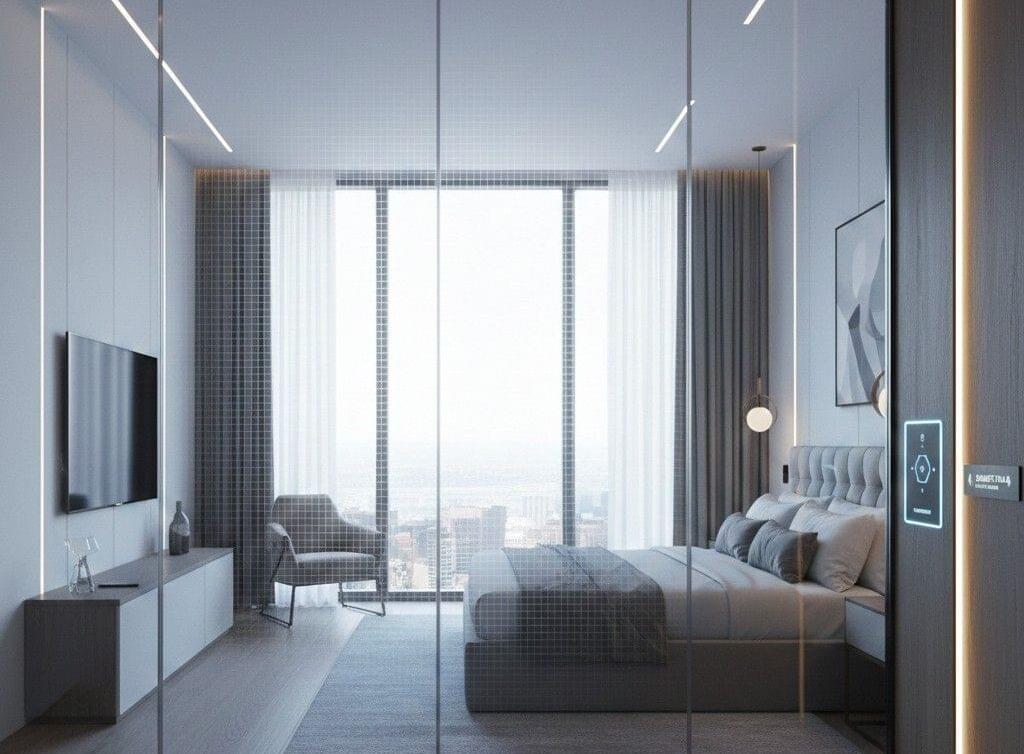
Blog Table of Contents Smart Film for Hotels: Modern Design with Instant Privacy Modern hotels are expected to deliver more than comfort—they must deliver experience. Privacy, lighting, and spatial flexibility now directly influence guest satisfaction, online reviews, and brand perception. Smart film for hotels is emerging as a practical solution that allows hospitality spaces to remain open and modern while giving guests instant control over privacy and light. Based on our experience working with architects, hotel operators, and renovation teams, smart film is no longer a novelty—it’s a functional design tool with real operational benefits. Why Smart Film Is Growing in the Hospitality Industry Guest expectations have changed. Today’s travelers value: Privacy without feeling boxed in Clean, minimalist interiors Technology that feels intuitive, not gimmicky Key drivers behind smart film adoption in hotels include: Open-plan bathroom and suite designs that still require privacy Demand for premium, technology-forward interiors Renovation projects seeking flexible upgrades without major construction Smart film addresses these needs by offering privacy on demand without permanent barriers. What Is Smart Film and How Does It Work in Hotels? Smart film is a switchable film applied to glass that changes from transparent to opaque instantly. In hospitality environments, it is primarily used for privacy control and light diffusion. How PDLC Smart Film Works PDLC (Polymer Dispersed Liquid Crystal) smart film operates by aligning liquid crystal particles with electricity: Power on: Glass is transparent Power off: Glass becomes opaque (frosted) Switching time: Typically under one second Controls: Wall switches, remotes, or building automation systems This same technology is used in residential and commercial applications, making it a proven and reliable solution. Smart Film vs Smart Glass for Hotels Hotels often compare smart film with smart glass during planning. Smart film advantages for hospitality projects: Can be retrofitted onto existing glass Minimal disruption during installation Ideal for phased, room-by-room renovations Smart glass is typically used in new construction, while smart film is often the more practical and cost-effective option for hotel upgrades. How Smart Film Improves the Guest Experience Privacy on Demand Without Closing Spaces Smart film allows guests to instantly switch privacy on or off, particularly in: Bathrooms Glass showers Open-plan suites This preserves spacious layouts while making privacy intuitive and guest-controlled. Wellness, Spas, and Pool Areas In spa and wellness environments, smart film enables: On-demand privacy for treatment rooms Smooth transitions between shared and private zones Calm, uncluttered visual environments This flexibility supports both guest comfort and efficient space usage. Perceived Luxury and Modern Design Smart film enhances design by: Eliminating curtains and bulky blinds Supporting minimalist, high-end interiors Reinforcing a modern, technology-forward brand image For upscale and lifestyle hotels, these design details directly influence guest perception and reviews. Smart Film Applications in Hotel Rooms Bathroom Privacy Common uses include: Glass showers and bathtubs Bathroom partitions Ensuite layouts When installed correctly, smart film performs reliably in humid hospitality environments. Suites and Interior Glass Walls In premium rooms and suites, smart film allows: Flexible zoning between sleeping and living areas Open layouts during the day Instant privacy at night Smart Film vs Curtains in Hotels Compared to traditional curtains or blinds, smart film offers: Better hygiene (no fabric collecting dust) Faster cleaning for housekeeping teams Reduced wear and replacement costs Curtains still have a place, but many hotels now use smart film as a cleaner, longer-lasting alternative in key areas. Light Control and Guest Comfort Smart film also plays an important role in lighting management. Reducing Glare While Preserving Daylight In its opaque state, smart film diffuses light, helping to: Reduce glare in bright rooms Maintain natural daylight Improve visual comfort Mood, Ambiance, and Wellbeing Lighting affects relaxation and sleep quality. Smart film supports: Softer, more comfortable lighting conditions Smooth transitions from day to night Reduced visual overstimulation Operational Benefits for Hotel Owners Maintenance and Hygiene Operational advantages include: No fabric to clean or replace Better performance in humid areas Simplified housekeeping routines Durability and Reliability Long-term performance depends on: Proper installation Reliable power supply Clear maintenance protocols Power-off default opacity also ensures privacy during outages—a key consideration for hospitality environments. Faster Room Turnover With fewer mechanical components than blinds or curtains, smart film supports: Faster cleaning cycles Less downtime Lower long-term maintenance effort Smart Film for Hotel Renovations and Retrofits Smart film is especially effective for existing hotels. Why It Works for Retrofitting Smart film is ideal when: Existing glass is structurally sound Major construction is not feasible Upgrades must be phased room by room Installation Considerations Successful projects require: Proper glass surface preparation Thoughtful electrical routing Coordination with renovation schedules Applications Beyond Guest Rooms Smart film is also effective in: Meeting rooms On-demand privacy and flexible layouts Lobbies and restaurants Visual openness with controlled separation Spas and wellness areas Zoned privacy without permanent walls Common Questions About Smart Film in Hotels Is Smart Film a Gimmick? Guest feedback is consistently positive when: Controls are intuitive Switching is instant Design integration feels intentional What If Smart Film Fails? Risk is managed through: Manual override options Clear maintenance procedures Realistic performance planning ROI and Long-Term Value Value comes from: Reduced cleaning and replacement costs Improved guest satisfaction Long-term design flexibility Is Smart Film Right for Your Hotel? Smart film delivers the most value when aligned with: Overall design strategy Guest experience goals Operational realities It doesn’t need to replace every curtain—but used strategically, it offers measurable benefits. Balancing Privacy and Daylight in Hotels Smart film allows hotels to move beyond static design choices. Instead of choosing between openness and privacy, hospitality spaces can now offer both—instantly and on demand. When thoughtfully implemented, smart film enhances guest comfort, supports efficient operations, and aligns with modern hospitality design expectations. Latest Blogs Smart Film Blog Table of Contents Smart… Office Privacy Blog Table of Contents How… Cut Energy Blog Table of Contents Smart… Modern Privacy Blog Table of Contents How… Revolutionizing Interior Blog Table of Contents The…
Office Privacy Without Walls:
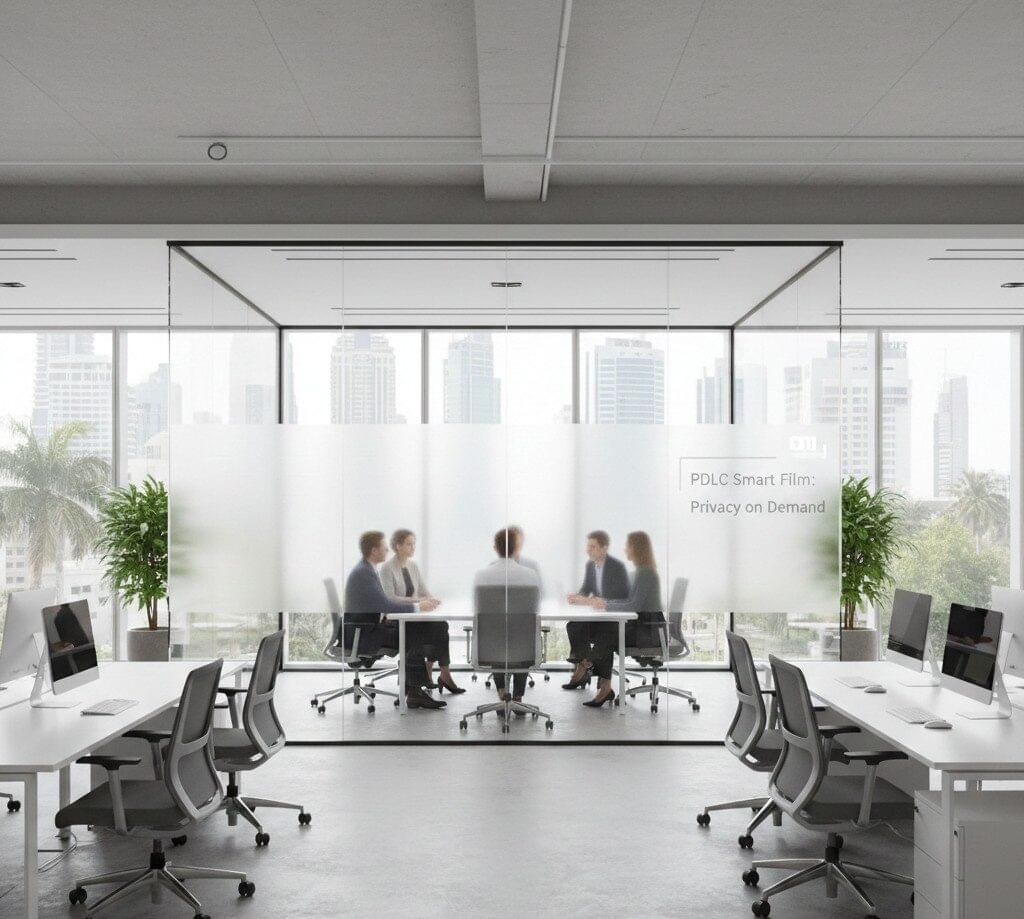
Blog Table of Contents How PDLC Smart Film Provides Office Privacy Modern offices are increasingly designed around transparency—glass walls, open layouts, and minimalist interiors dominate commercial spaces across the UAE. While these designs promote collaboration and natural light, they also introduce a familiar challenge: how to ensure privacy without sacrificing openness. This is where PDLC smart film has emerged as a practical and design-forward solution. In this article, we explain how PDLC smart film provides office privacy while supporting flexible, modern workspaces. Why Modern Offices Need Privacy Without Physical Walls The rise of glass-heavy office interiors in the UAE Across UAE commercial interiors, glass has become the material of choice. From corporate offices to co-working spaces, glass partitions offer a clean aesthetic and help maximize daylight—essential in dense urban environments. Challenges with traditional office privacy solutions Fixed partitions are costly, permanent, and disruptive to install. Blinds and curtains interrupt clean design, require ongoing maintenance, and collect dust—an issue in high-use offices. On top of this, high construction and retrofit costs make traditional privacy solutions less appealing for businesses seeking flexibility. Balancing openness, collaboration, and privacy in hybrid offices As hybrid work models grow, offices must adapt quickly. Teams need spaces that shift between open collaboration and confidential focus. This demand has accelerated interest in privacy without walls office design, where spaces can change function without physical alterations. How PDLC Smart Film Enables Office Privacy? PDLC smart film and switchable glass technology PDLC (Polymer Dispersed Liquid Crystal) smart film is a switchable layer applied to glass. When powered, it turns transparent; when switched off, it becomes opaque. This technology transforms standard glass into on-demand privacy glass. How PDLC smart film works on glass surfaces So, how does smart film provide privacy in glass offices? Liquid crystals within the film align when electricity is applied, allowing light to pass through. When power is cut, the crystals scatter, instantly obscuring visibility. Transparent vs opaque states explained In its transparent state, the glass remains clear and bright. In opaque mode, it delivers full visual privacy while still allowing diffused light—ideal for modern office glass privacy needs. PDLC Smart Film for Office Privacy Instant privacy on demand using electricity The core advantage of PDLC privacy film in an office is speed. Privacy is achieved instantly with a switch, remote, or app—no manual adjustment or physical barriers required. Visual separation without physical barriers Unlike partitions, PDLC smart film creates visual separation without closing off space. This addresses a major competitive gap: privacy without adding walls. Maintaining daylight, openness, and spatial flow Natural light remains uninterrupted, supporting employee comfort and productivity while preserving architectural intent. Office Privacy Use Cases for PDLC Smart Film Meeting rooms and boardrooms One of the most common meeting room privacy solutions, PDLC smart film allows glass-walled rooms to switch from transparent to private instantly during meetings, presentations, or video calls. Executive cabins and leadership offices Executives gain visual privacy when needed without feeling isolated behind solid walls, preserving openness and authority in glass-based offices. HR rooms and confidential discussion spaces PDLC smart film provides privacy on demand for sensitive conversations such as interviews, reviews, or disciplinary meetings—without permanent enclosure. Collaborative spaces that convert into private zones In agile and hybrid offices, shared spaces can quickly shift from open collaboration areas to focused, private work zones as required. Reception areas and client-facing glass offices Smart film maintains a professional, transparent appearance while offering instant discretion for private discussions or VIP meetings. Can Smart Film Replace Office Partitions? Smart film vs drywall and glass partitions Can smart film replace office partitions in modern workspaces? In many cases, yes. PDLC smart film provides visual privacy comparable to frosted glass or walls—without permanence. Speed of installation vs construction timelines Installation is significantly faster than building partitions, a key advantage for UAE retrofits. Cost, disruption, and long-term flexibility comparison While initial costs vary, smart film offers long-term flexibility that traditional construction cannot match. Smart Film vs Blinds for Office Privacy Design, maintenance, and cleanliness comparison Blinds interrupt clean lines and require regular cleaning. Smart film integrates seamlessly into glass surfaces. Privacy performance and user control Smart film provides uniform privacy across the glass, controlled via switches, apps, or BMS systems. Why minimalist UAE offices prefer smart film over blinds For modern, minimalist interiors, switchable smart film for offices aligns better with design expectations in the UAE. Can PDLC Smart Film Be Added to Existing Glass? Retrofit installation process explained Yes—PDLC smart film can be installed on existing glass walls, making it ideal for office upgrades. Glass types suitable for PDLC smart film Most standard office glass types are compatible, though assessments are recommended. Downtime, disruption, and office continuity considerations Installation is typically quick, allowing offices to remain operational. PDLC Smart Film Work in the UAE Climate? Performance in heat, sunlight, and glare Smart film glass in the UAE is engineered to perform under high temperatures and intense sunlight. West-facing offices and glare reduction benefits Opaque mode reduces glare, especially in west-facing offices during peak afternoon sun. Electrical safety, durability, and lifespan in UAE environments Low-voltage operation and robust materials ensure reliable performance over time. Beyond privacy, smart glass solutions can help manage heat gain and glare in high-sun environments like the UAE. Learn more about this in our guide on Smart Glass Energy Savings for Homes and Buildings. Maintenance and Long-Term Care How to Clean PDLC Smart Film Safely in Office Environments Routine cleaning with soft cloths and approved agents keeps the surface clear. Harsh chemicals should be avoided, especially in healthcare environments. Wear, Tear, and Expected Lifespan of PDLC Smart Film In commercial office use, PDLC smart film offers a long lifespan with stable performance, even with frequent switching. Replacement vs Upgrade Considerations Over Time Controls and automation can often be upgraded without replacing the film, supporting future-proof ownership. Smart Controls and Integration Wall switches, remote controls, and mobile apps Smart film integrates easily with common control systems. Integration with BMS and smart office systems
Cut Energy Bills with Smartglass
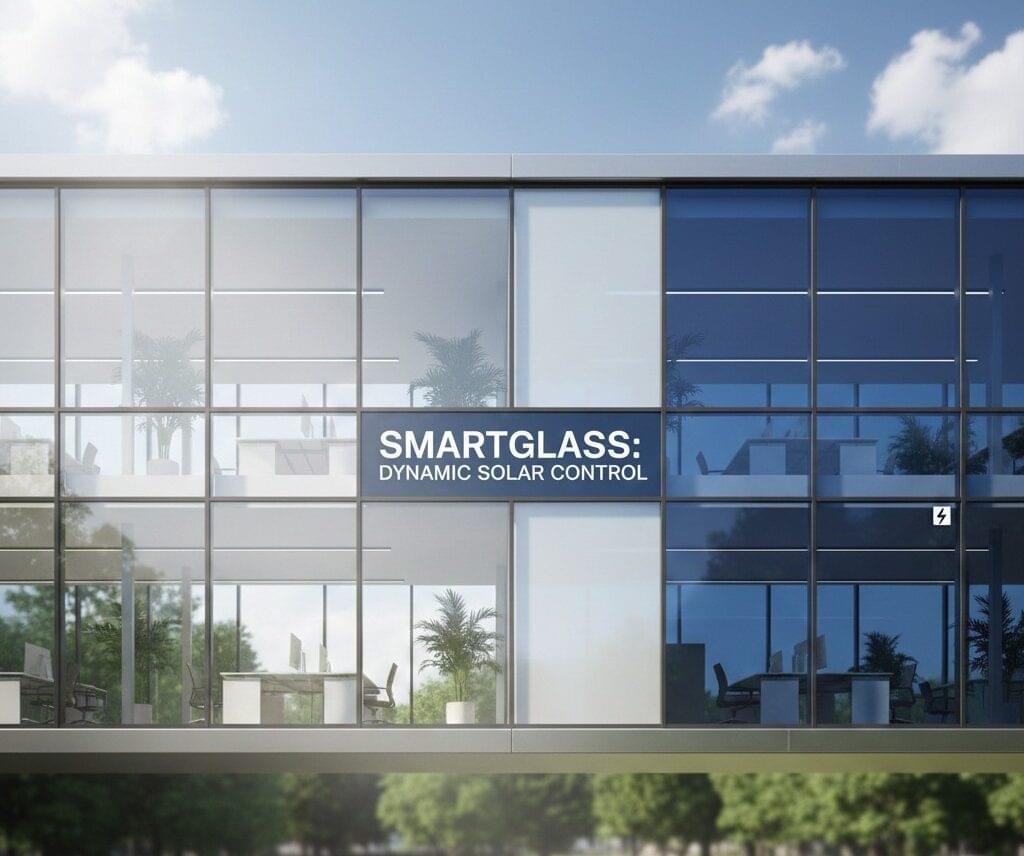
Blog Table of Contents Smart Glass Energy Savings for Buildings Smartglass energy savings are becoming a priority in the UAE and GCC, where cooling costs are among the highest anywhere in the world. Long summers, intense solar heat, and glass-heavy architecture make air-conditioning a year-round necessity. The problem? Traditional windows allow a massive amount of heat inside, forcing AC systems to run longer and work harder. Smartglass changes this completely. By reducing heat gain while still allowing daylight, it helps buildings stay cooler, lowers electricity bills, and improves overall comfort. In this guide, we break down how smartglass works, what kind of savings it delivers, how it compares to other options, and why it’s becoming a top choice for homes and commercial buildings across the region. Why Smartglass Matters for Energy Savings? Smartglass—sometimes called switchable glass—changes from clear to opaque when powered. Its biggest advantage in hot climates is its ability to reduce solar heat gain without blocking natural light. There are different smartglass technologies, and each affects energy efficiency differently: PDLC (Polymer Dispersed Liquid Crystal) Best for privacy + moderate heat reduction. Ideal for retrofits using smart film. Electrochromic Smartglass Dynamic tinting, strong energy savings, used in advanced facades. Suspended Particle Devices (SPD) Fast switching and great solar control. Smartglass is available as: Integrated Glass Units (IGUs) for new construction Smart films for existing windows Traditional glazing loses energy through conduction, radiation, and infrared heat transfer. Smartglass reduces these losses, helping buildings maintain comfortable temperatures with less cooling demand. How Smartglass Reduces Heat Blocking NIR Heat Radiation While Allowing Natural Light Most heat entering a building comes from near-infrared (NIR) radiation, not visible light. Smartglass blocks a significant portion of this infrared heat while allowing brightness into the room. The result: clear visibility and daylight without the temperature rise, reducing AC strain throughout the day. Year-Round Heat Control: Adaptive Based on Outdoor Conditions Unlike fixed tints or films that can’t respond to weather changes, smartglass adapts instantly. On hot days: Blocks solar heat and glare On cooler days: Allows warmth in to reduce heating load This adaptability makes it efficient across UAE’s seasonal temperature variations. Measurable Energy Savings Buildings using smartglass typically achieve: Up to 20% reduction in total energy use 40–60% reduction in heat gain through glass Lower peak cooling load, reducing stress on HVAC systems Paired with daylight, these improvements increase comfort without making rooms dark. Why UAE Buildings Benefit from Smartglass In the UAE, cooling accounts for 70–80% of electricity consumption in many commercial and residential buildings. Smartglass directly reduces solar heat load from windows—often the biggest source of interior heat. It’s especially valuable for: Villas with large sliding doors Glass towers and office facades Hotels needing comfort + energy control Retail spaces exposed to harsh afternoon sun Smartglass keeps these spaces bright, cool, and efficient without heavy blinds or dark tinting. Smartglass vs Blinds, Tints & Low-E Films Energy Efficiency Comparison Traditional shading solutions block light but aren’t effective at controlling solar heat: Solution Daylight Heat Reduction Energy Savings Visibility Blinds/Curtains Low Low–Moderate Low Blocks views Tinted Film Medium Moderate Moderate Permanent darkening Low-E Glass Medium High High Fixed performance Smartglass High High–Very High High Clear views + privacy Real Comfort Advantage: Daylight Without Heat Smartglass eliminates the trade-off between cooling efficiency and natural light. Rooms stay bright and comfortable—without overheating or relying on blackout blinds. Smartglass vs Smart Film: Energy Savings Both options improve energy performance, but they fit different use cases: Smartglass (IGU) Best insulation Strongest solar heat reduction Ideal for new buildings or major renovations Highest long-term energy savings Smart Film Installs on existing windows More budget-friendly Good privacy + moderate heat control Best for quick upgrades in villas, offices, clinics, hotels Smart film is a great retrofit option, especially in Dubai, Abu Dhabi, Qatar, and Saudi Arabia where replacing fixed glass is costly. Buildings That Benefit Most from Smartglas Homes & Villas Large glass doors and windows bring in intense heat. Smartglass and smart film reduce AC usage while adding privacy. Learn how PDLC smart film works in homes. Offices & Corporate Buildings Cuts solar load on glass façades and provides switchable privacy in meeting rooms. Hotels & Hospitality Enhances guest comfort, ambiance, and energy efficiency without blocking views. Healthcare & Clinics Improves patient privacy while lowering cooling costs and blocking harmful UV. Retail & Restaurants Cooler interiors improve customer flow and reduce AC bills. Maintenance & Operating Costs of Smartglass Smartglass uses very little electricity—mostly in its ON (clear) state.Typical PDLC consumption: 3–7 watts per square meter, meaning yearly operating costs are minimal. Operating cost is usually much lower than the savings from reduced cooling demand, supporting overall ROI. Real Savings Scenarios 10-Story Office Tower in Dubai Marina Reduced cooling load by 18% after replacing west-facing windows with smartglass. Villa With a Full-Glass Facade in Abu Dhabi Achieved 25% lower AC usage during peak midday heat. Hotel in Riyadh With South-Facing Rooms Improved comfort and cut peak cooling demand significantly. Durability, UV Protection & Lifespan Modern smartglass offers: Strong UV and IR blocking Lifespan of 8–15 years (higher with proper installation) Protection against fading interiors Better clarity and reduced haze compared to cheap alternatives Quality installation is critical to prevent delamination and ensure performance. Future of Energy-Efficient Smart Windows Emerging technologies will enhance performance further: Dual-band electrochromic windows Energy-storing smartglass AI-driven automatic tinting systems These advancements will continue to push smartglass into mainstream adoption across GCC buildings. Smartglass Myths (And the Truth Behind Them) Smartglass is only for privacy. Reality: It delivers measurable energy savings. Tint is enough for heat control. Tint can’t adapt or block as much IR heat. Curtains work the same. Curtains heat up and radiate heat indoors. Smartglass makes rooms dark. It keeps them bright without heat. When Smartglass Pays for Itself In most UAE/GCC buildings, smartglass pays back within 2–6 years, depending on: Glass area Solar exposure Cooling system efficiency Electricity tariff ROI includes energy savings + privacy + comfort. Smartglass and smart film
Modern Privacy Without Renovation
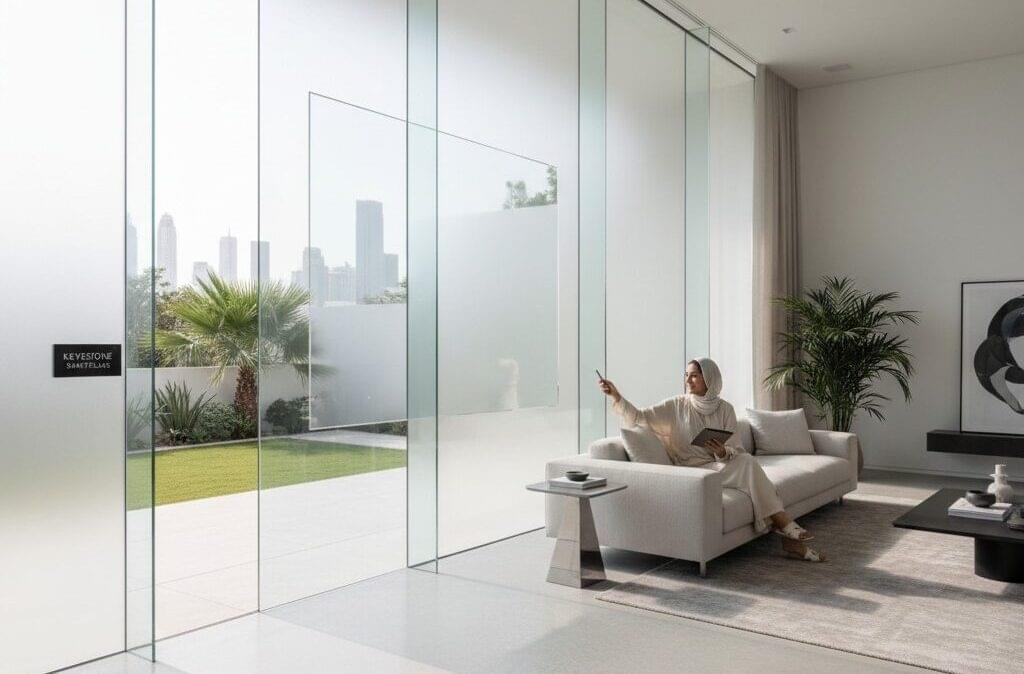
Blog Table of Contents How PDLC Smart Film Works for Homeowners In the UAE, homeowners love clean, modern interiors—open layouts, natural daylight, and clutter-free designs. But achieving privacy without heavy renovation can be a challenge. That’s why PDLC smart film (also known as switchable film or smart window film) has become one of the most popular upgrades across villas, apartments, and home offices. PDLC smart film delivers instant privacy, a sleek modern look, and soft daylight, all without replacing existing glass. The film installs directly onto your current windows, making it the ideal retrofit solution for UAE homes. In this guide, we break down how PDLC smart film works, what to expect in real life, and how Keystone SmartGlass helps homeowners upgrade without construction or mess. What Is PDLC Smart Film? PDLC stands for Polymer-Dispersed Liquid Crystal—a smart technology that lets glass switch from clear to frosted in less than a second. A PDLC smart film is made of: A polymer layer filled with liquid crystals Transparent conductive layers Adhesive backing A low-voltage transformer How it works: Powered ON Liquid crystals align Glass becomes clear Powered OFF Crystals scatter Glass turns frosted Smart film vs. smart glass: Smart film Sticks onto your existing windows—No replacement needed Smart glass Requires removing and reinstalling entire window units For the UAE’s harsh climate—heat, dust, and UV exposure—smart film offers a cleaner, longer-lasting alternative to blinds and curtains. How PDLC Smart Film Works PDLC film has two modes: OFF Mode → Frosted Privacy The liquid crystals scatter light, making the glass fully opaque. Perfect for: Bathrooms Bedrooms Street-facing windows ON Mode → Clear with Light Haze When powered: Clarity increases A mild haze remains (normal for PDLC technology) At night, shadows may appear with strong backlighting Smart film is not a blackout product—but it provides excellent daytime privacy with bright, natural illumination. Privacy in Real Life Privacy changes depending on lighting conditions: Daytime, OFF mode Completely opaque Nighttime, lights ON Faint silhouettes may appear ON mode, daytime Clear with slight haze ON mode, nighttime Clarity reduces under heavy indoor lighting Setting clear expectations helps homeowners choose the right solution confidently. Where Homeowners Use PDLC Smart Film Smart film works beautifully across modern UAE homes: Home offices for video-call privacy Bathrooms and shower glass Bedrooms facing neighbors or streets Sliding glass doors Kitchen windows and skylights Mezzanine and staircase glass panels Each application enhances both privacy and interior aesthetics. Smart Home Integration PDLC smart film connects seamlessly with Alexa, Google Home, Apple HomeKit, and Z-Wave, making privacy control effortless. Homeowners can: Use voice commands like “Alexa, turn on privacy mode.” Enable motion-activated bathroom privacy Set sunrise/sunset transparency schedules Control film via wall switches, remotes, or smartphone apps It becomes a smooth, automatic part of your smart home ecosystem. Retrofit Installation: No Renovation Needed One of the biggest advantages of PDLC film is the clean, fast, zero-renovation installation. How it’s installed: Film is applied to existing glass Edges are trimmed precisely A slim transformer powers the film Wires are hidden neatly along window frames Power usage: Extremely low—similar to an LED bulb. DIY vs Professional: DIY attempts often cause: Bubbles Misalignment Peeling Warranty issues Keystone SmartGlass ensures certified installation, clean wiring, and long-term performance. Benefits for Homeowners PDLC smart film offers a range of advantages: Ultra-modern, minimalist look Maximum natural light Heat and UV reduction (important for UAE homes) No cords → safer for children and pets Simple cleaning Instant transformation of any room Architects and interior designers frequently recommend smart film for premium spaces. Realistic Limitations Being transparent about limitations builds trust: Slight haze in ON mode is normal Nighttime silhouettes may appear Requires constant power to stay clear Low-grade films may yellow or peel Warranty and lifespan depend on quality Choose certified brands and installers for lasting performance. Smart Film vs Blinds vs Curtains Feature PDLC Smart Film Blinds Curtains Privacy Instant ON/OFF Adjustable Good Aesthetic Sleek, modern Mechanical Traditional Cleaning Very easy Dust-prone Requires washing Heat/UV Blocking High Moderate Low Durability Long Medium Medium Space Needed None Uses space Uses space Verdict: For homeowners wanting privacy + daylight + a clean, modern look, smart film is the superior choice. Installation Timeline & What to Expect Most homes take 2–6 hours to complete. During the site visit, Keystone SmartGlass will: Inspect and measure windows Suggest wiring routes Show clarity/haze samples Explain smart home integration Homeowners simply provide access—no prep needed. Care, Cleaning & Longevity Tips To keep your film in perfect condition: Use a microfiber cloth Clean with mild soap Avoid sharp tools Do not tug on wiring Choose UV-stable film for Dubai heat A high-quality PDLC film typically lasts 8–12 years. Frequently Asked Questions Can PDLC film be installed on existing windows? Yes—it’s ideal for retrofits. Is smart film better than blinds? For modern design and daytime privacy, absolutely. Does it reduce heat? Yes, it blocks UV and lowers heat gain. How much power does it consume? Very low—similar to an LED bulb. Can I use Alexa or Google Home? Yes, full smart home integration. Is it suitable for bathrooms? Yes, with moisture-protected installation. How long does it last? 8–12 years with proper care. Upgrade Your Home Privacy With Keystone SmartGlass Transform your home with instant privacy, comfort, and modern style. Keystone SmartGlass provides: Free consultation Expert installation Smart home integration Premium PDLC film Long-term warranty Professional guidance Book your site visit today and experience the future of privacy—right at home. REACH OUT TODAY Latest Blogs Smart Film Blog Table of Contents Smart… Office Privacy Blog Table of Contents How… Cut Energy Blog Table of Contents Smart… Modern Privacy Blog Table of Contents How… Revolutionizing Interior Blog Table of Contents The…
Revolutionizing Interior Design
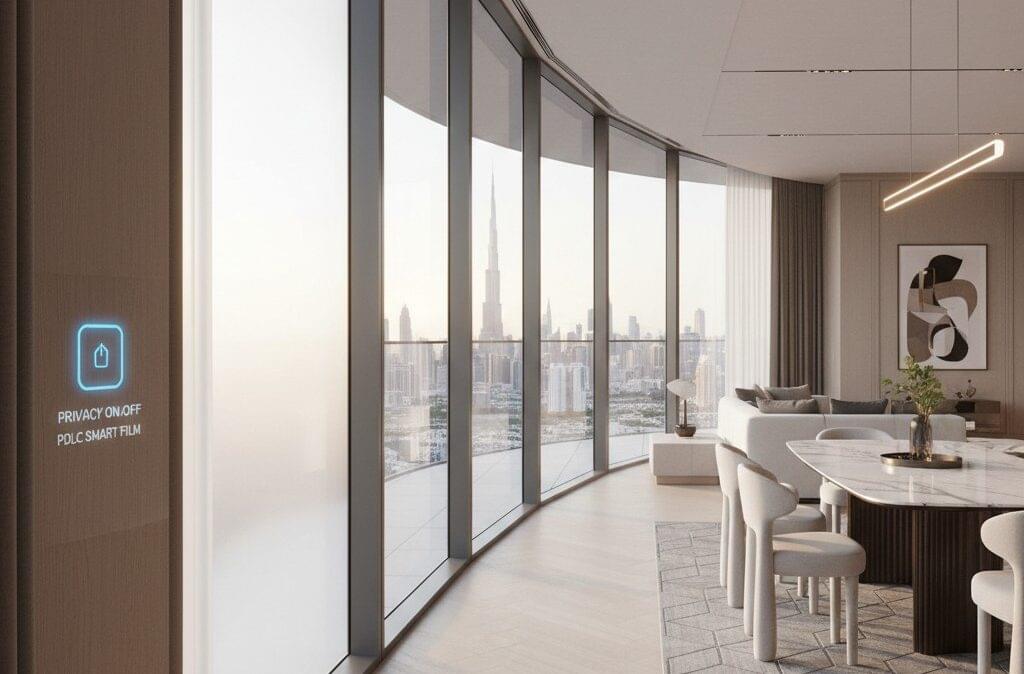
Blog Table of Contents The Role of PDLC Films in UAE Aesthetics In the UAE, where design innovation meets luxury, PDLC (Polymer Dispersed Liquid Crystal) films are redefining how spaces look and feel. These advanced smart films combine technology and style, switching instantly between transparent and opaque states. For architects, interior designers, and property owners, PDLC films create the perfect balance of privacy, light control, and energy efficiency—making them an essential part of modern, sustainable interiors across the Emirates. What Makes PDLC Films Special? The Technology Behind the Glass PDLC films contain microscopic liquid crystal droplets suspended in a polymer layer. When powered off, they scatter light to appear opaque; when powered on, the crystals align and allow light to pass through—creating transparency in seconds. Key Advantages On-Demand Privacy Instantly switch between transparent and frosted glass with a simple touch or remote control. Energy Efficiency Reduce solar heat and UV exposure, cutting down on air-conditioning costs—crucial in the UAE climate. Long Lifespan Made from high-quality PET substrates, PDLC films maintain 80%+ clarity and durability for years of use. Aligning with UAE Interior Design Trends Sleek, Adaptive Design Modern UAE interiors favor clean lines, natural light, and multipurpose spaces. PDLC smart films replace bulky blinds or curtains with a minimalist alternative that transforms a room’s mood in seconds—open and bright one moment, private and calm the next. Smart Living Integration PDLC films integrate seamlessly with smart home systems. Whether through a smartphone app or voice commands, users can control privacy, lighting, and ambiance instantly. This adaptability fits perfectly with the UAE’s growing appetite for intelligent, user-centric living spaces. Customization and Brand Expression Creative Color Options Today’s PDLC films go beyond clear and opaque. Through advanced dye techniques and dichroic coatings, they can display soft hues or iridescent effects that shift with the angle of light—ideal for creative interior applications. Smart Branding for Businesses For corporate spaces, hotels, and retail outlets, PDLC films double as design elements. Logos or brand colors can be integrated into the glass itself, turning partitions and windows into elegant, functional branding tools—perfect for UAE businesses that value both aesthetics and innovation. PDLC Films: Home & Business Applications For Homeowners Privacy with Style Ideal for bedrooms, bathrooms, or living rooms that need light control without heavy drapes. Lower Energy Bills Natural light management helps maintain comfortable temperatures and reduce energy use. For Commercial & Hospitality Spaces Dynamic Offices Instantly shift between open workspaces and private meeting areas. Luxury Experiences Hotels and restaurants use PDLC films to create immersive, high-end atmospheres that change with the mood or time of day. PDLC FILM Installation & Maintenance PDLC Smartglass film Installation Tips Clean Surfaces Thoroughly Any dust or residue can affect adhesion and appearance. Accurate Cutting Trim films slightly smaller than the glass panel for a clean fit. Professional Wiring Always rely on certified technicians to conceal wiring safely and maintain system integrity. Care & Longevity Gentle Cleaning Use a soft cloth with mild cleaner; avoid abrasives. Worth the Investment Though more expensive upfront, PDLC films last over a decade and deliver long-term savings in energy and maintenance. Future of Smart Glass Design in the UAE Next-Gen Innovation The future of PDLC technology is all about intelligence and sustainability. Integration with IoT and AI will allow glass to adjust automatically to light levels, occupancy, or temperature—turning ordinary buildings into smart ecosystems. Design Evolution Expect to see more PDLC integration in biophilic design, where glass enhances natural light while maintaining privacy. Custom textures, patterns, and interactive displays are also emerging—blending art, technology, and architecture in entirely new ways. Conclusion PDLC smart films are more than just a design trend—they’re shaping the future of interior architecture in the UAE. With their ability to combine privacy, energy efficiency, and elegance, these films are empowering architects, designers, and homeowners to build spaces that adapt to modern lifestyles. For a region defined by innovation and luxury, Keystone Smartglass Films helps bring that vision to life—offering high-performance PDLC solutions that transform how people experience light, comfort, and design. Latest Blogs Smart Film Blog Table of Contents Smart… Office Privacy Blog Table of Contents How… Cut Energy Blog Table of Contents Smart… Modern Privacy Blog Table of Contents How… Revolutionizing Interior Blog Table of Content The Role…