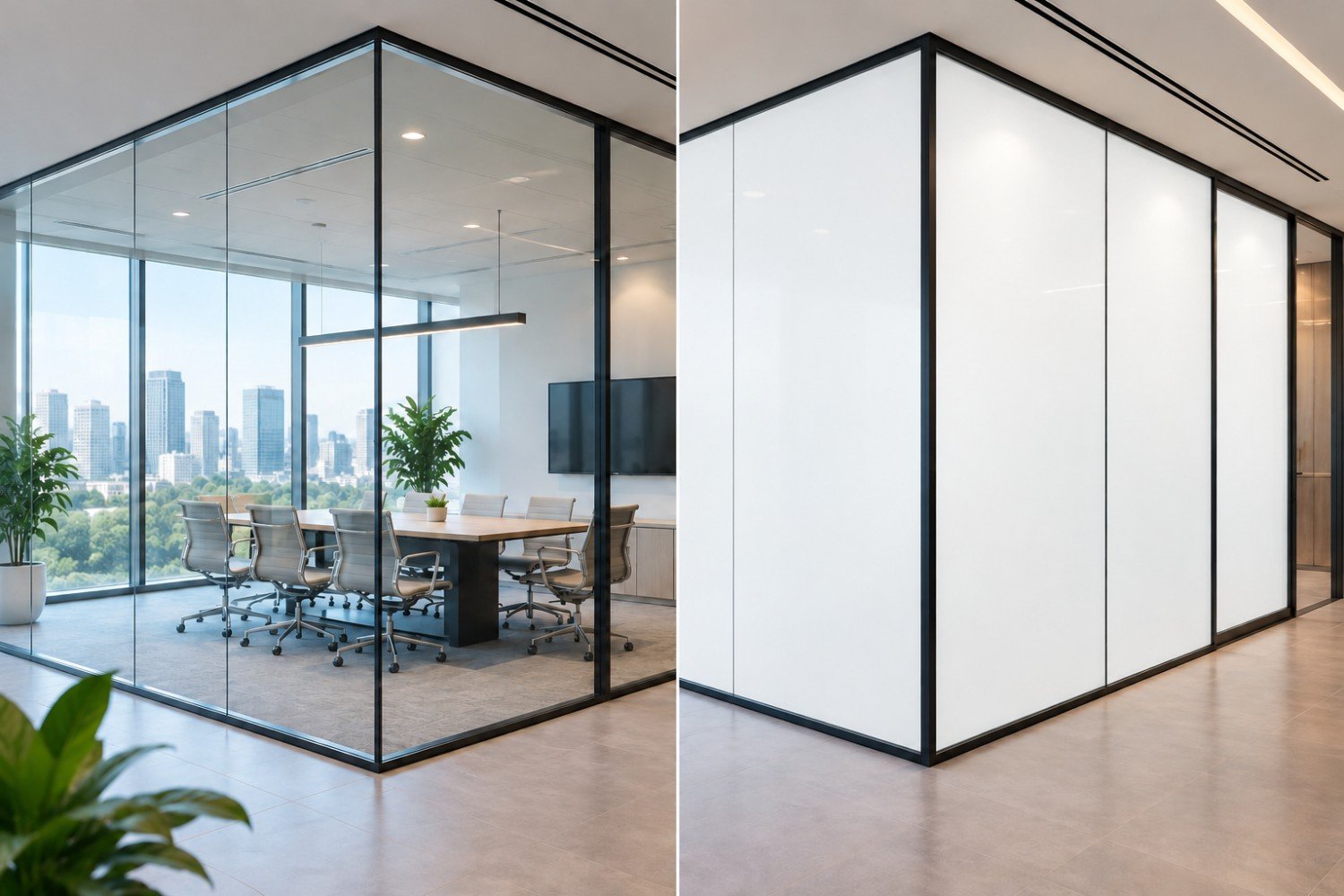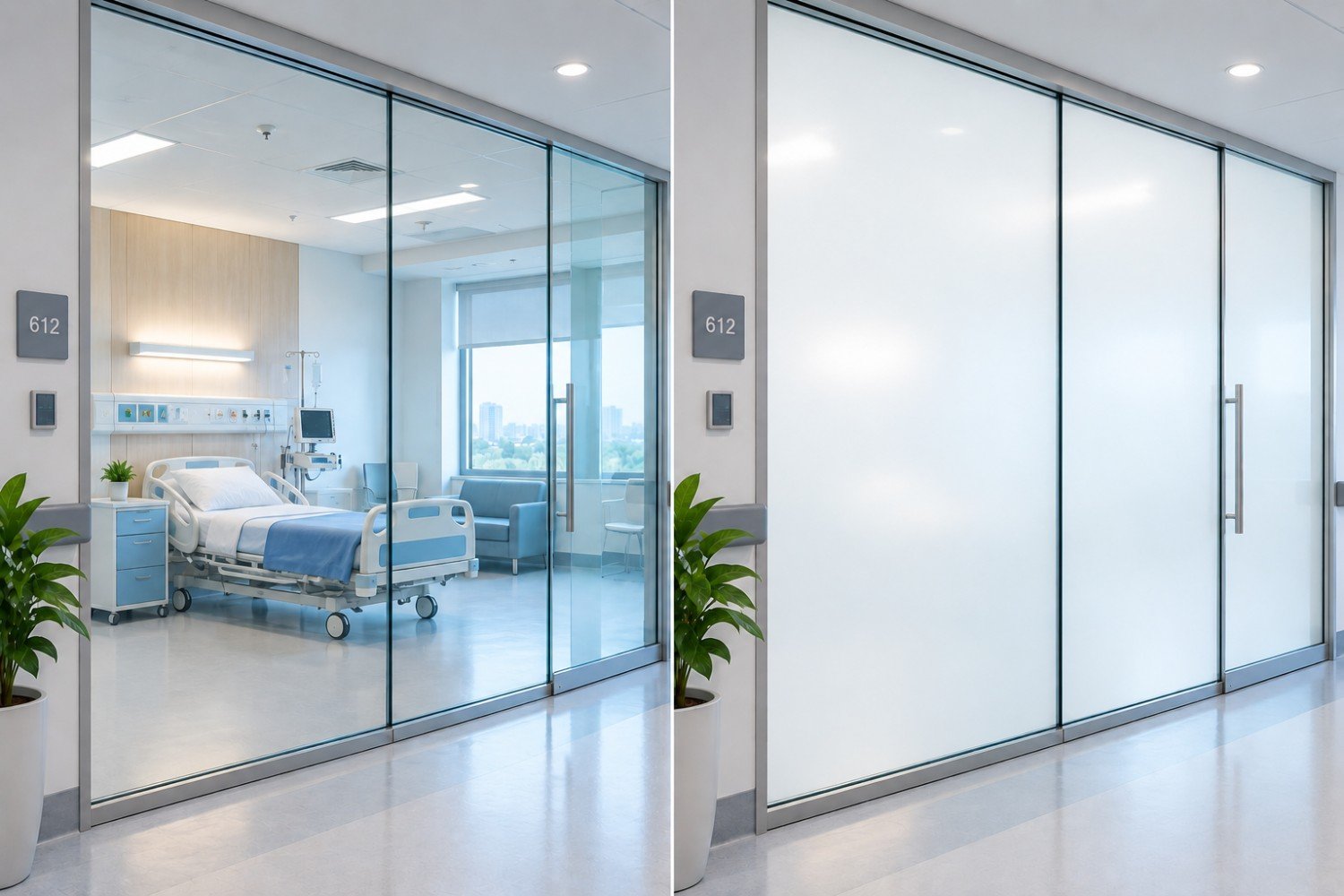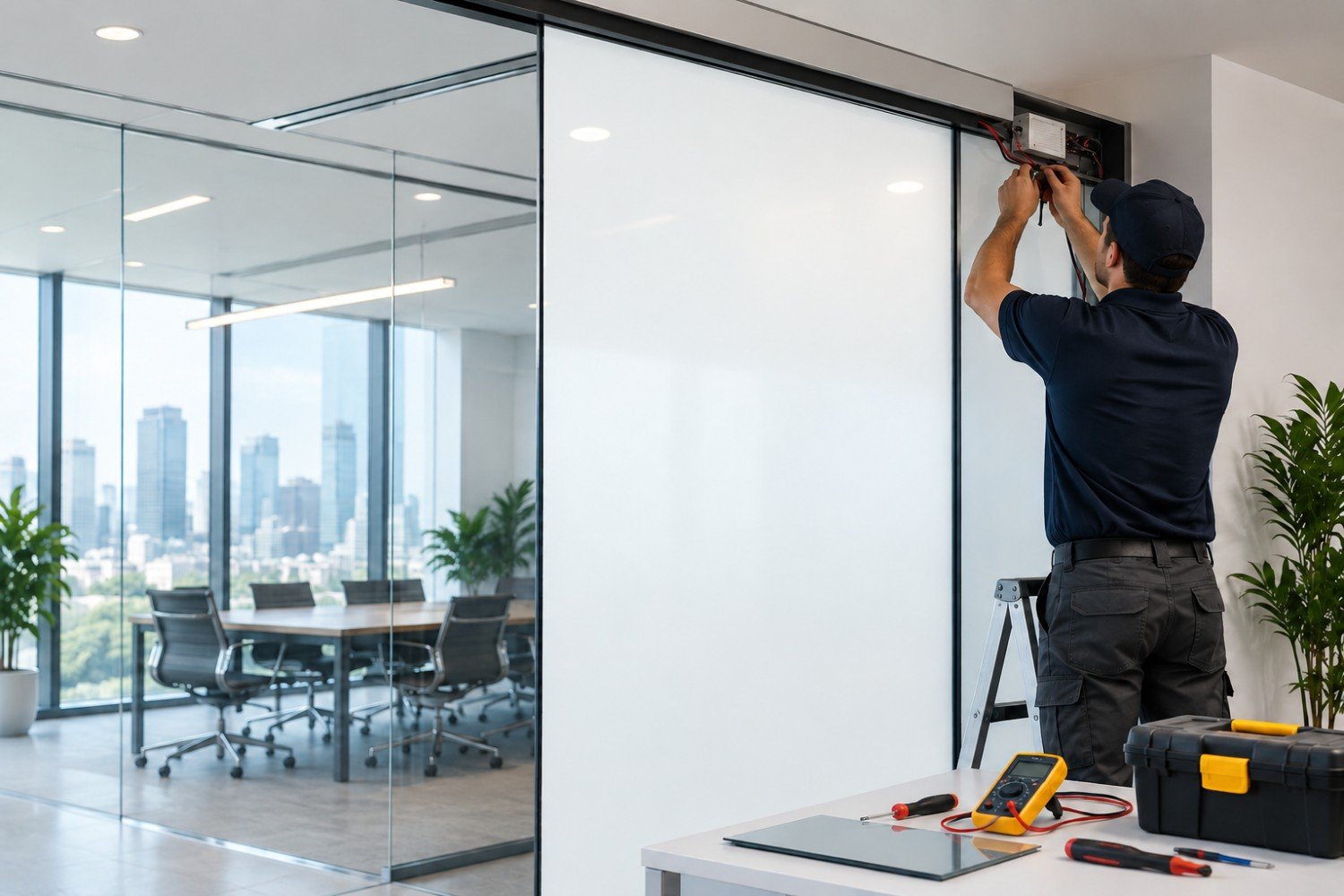
Smart film is a high-performance privacy solution, but it is also an electrical system bonded to glass. When problems occur, they are rarely random. Most issues originate from power instability, installation errors, or environmental stress.
these problems are usually predictable and diagnosable. This guide explains how to identify common faults, apply practical repair steps, and determine when replacement may be the better option.
Smart Film Troubleshooting Checklist
Most performance problems are related to power supply, edge sealing, or environmental exposure. Before assuming the film itself has failed, follow a structured inspection process.
Voltage drop is one of the most common causes of performance issues.
Test the transformer output under load, not just at idle. Confirm the correct voltage rating and ensure that relay systems or automation controls are not interrupting the current flow. Even minor voltage instability can affect switching quality and clarity.
Moisture ingress typically begins at the edges. Look for lifting corners, early delamination, or discoloration along the perimeter.
Small edge failures can expand over time, so identifying them early can help prevent more serious degradation.
Environmental conditions play a major role in long-term performance. In hot climates such as the UAE, sun-facing glass and continuous operation can increase internal stress.
Heat buildup, humidity, and limited ventilation may accelerate haze formation, opacity decline, and material fatigue.
A large percentage of issues originate during installation rather than manufacturing.
Surface preparation, wiring accuracy, transformer sizing, and glass compatibility should all be verified before concluding that the film itself is defective.
Why Smart Film Doesn’t Fully Frost
Low opacity is often caused by voltage instability or internal PDLC degradation.
If your smart film does not fully frost, start by testing the electrical system. Even slight voltage drops can prevent the liquid crystals from aligning correctly.
Common causes include:
- Loose wiring
- Undersized transformers
- Voltage drop across large panels
- Relay or control system misconfiguration
If the film previously worked properly and the opacity gradually declined, electrical stress may be responsible. When voltage readings remain stable but full frosting does not return, internal material degradation may have occurred, making replacement the more practical solution.
Why Does Smart Glass Look Hazy?
A small amount of diffusion is normal, but excessive haze usually indicates a problem.
All PDLC systems produce slight optical softness compared with untreated glass. However, significant haze may result from insufficient voltage, UV exposure, aging materials, or lower-grade film quality.
If voltage levels are correct and clarity does not improve, the haze is likely related to the film material rather than the installation.
Why Is Smart Film Losing Opacity?
Gradual opacity loss is commonly linked to heat stress or continuous electrical load.
If performance declines within one to two years, prolonged heat exposure or constant operation may be accelerating PDLC fatigue. Incorrect transformer sizing and inadequate edge sealing can worsen the issue.
Yellowing or discoloration indicates material aging and cannot be reversed. In these cases, replacement is usually the most reliable long-term solution.
Smart Film Switching Issues
Uneven switching generally occurs when electrical distribution across the panel is inconsistent.
Large panels are more susceptible to voltage drop, which can cause sections of the film to switch differently. Patchy frosting or ghosting may also result from:
- Internal delamination
- Adhesive breakdown
- Moisture intrusion
- Corroded busbars
These symptoms typically indicate electrical imbalance or structural separation within the film.
Smart Film Heat Buildup Issues
Heat is a major factor in long-term smart film performance.
Continuous powering raises internal temperatures, especially on sun-exposed façades. When heat becomes trapped between glazing layers, stress increases on both the PDLC layer and the glass.
Over time, this can reduce clarity, accelerate degradation, and increase the risk of thermal cracking. Proper system specification during the design stage helps minimize these risks.
Smart Film Moisture Issues
Smart film installed in humid environments requires careful edge protection and electrical planning.
Moisture intrusion can damage conductive layers and weaken switching performance. Installations in showers, spas, or high-humidity areas must include sealed edges, protected wiring channels, and properly positioned transformers.
Ensuring electrical compliance in wet areas is essential to avoid premature system failure.
Smart Film Installation Problems
Many problems originate during installation rather than manufacturing.
Poor surface preparation can weaken adhesion, while dust or uneven glass surfaces increase the likelihood of early delamination. Incorrect transformer calculations and wiring mistakes may also cause voltage instability from the start.
In automated buildings, relay integration can introduce additional complexity if the system is not configured correctly.
Smart Film Electrical Troubleshooting
Electrical testing should always be the first step before considering film replacement.
Measure transformer output under load and check for voltage drop across large panels. Inspect busbar continuity and test relay or automation systems independently to isolate switching faults.
If instability persists, a licensed technician should inspect the circuit. Attempting complex electrical adjustments without proper expertise may create additional problems.
Manufacturer Quality Red Flags
Performance can vary significantly between manufacturers.
Rapid opacity decline, persistent haze from the first day of installation, early yellowing, or inconsistent switching behavior may indicate lower-quality materials. Limited warranties—especially those excluding heat-related issues—can also be a warning sign.
Before selecting a system, confirm its expected lifespan and performance standards for high-temperature environments.
Repair or Replace: Smart Film Guide
Some issues can be repaired, while others require replacement.
Electrical faults such as transformer failure, relay malfunction, wiring instability, or busbar disconnection can often be corrected without removing the film.
However, widespread delamination, structural discoloration, severe haze unrelated to voltage, or repeated performance decline usually justify replacement. In commercial and healthcare environments, reliability requirements may also lead to earlier replacement decisions.
Preventing Switchable Glass Problems
Preventive care can extend system lifespan and reduce downtime.
Avoid unnecessary continuous powering in high-heat areas. Conduct annual voltage inspections and monitor sun-facing panels regularly. Checking perimeter edges for early signs of moisture ingress can also prevent long-term damage.
In hot climates, environmental planning is just as important as product selection.
FAQs
With proper installation and stable voltage, most systems last between five and ten years.
Yes. Continuous operation combined with direct sun exposure can increase internal temperatures.
Voltage drop, busbar failure, or uneven electrical distribution are the most common causes.
Electrical issues can often be corrected without removing the film.
Improper installation or poor thermal assessment may increase stress on sun-exposed glass.
Final Thoughts
Most smart film problems are linked to installation quality, electrical stability, and environmental exposure rather than the core technology itself.
Accurate diagnosis helps prevent unnecessary replacement and protects long-term performance. For UAE-based projects, Keystone Smartglass Film can assess your system and recommend practical solutions based on your specific installation conditions.