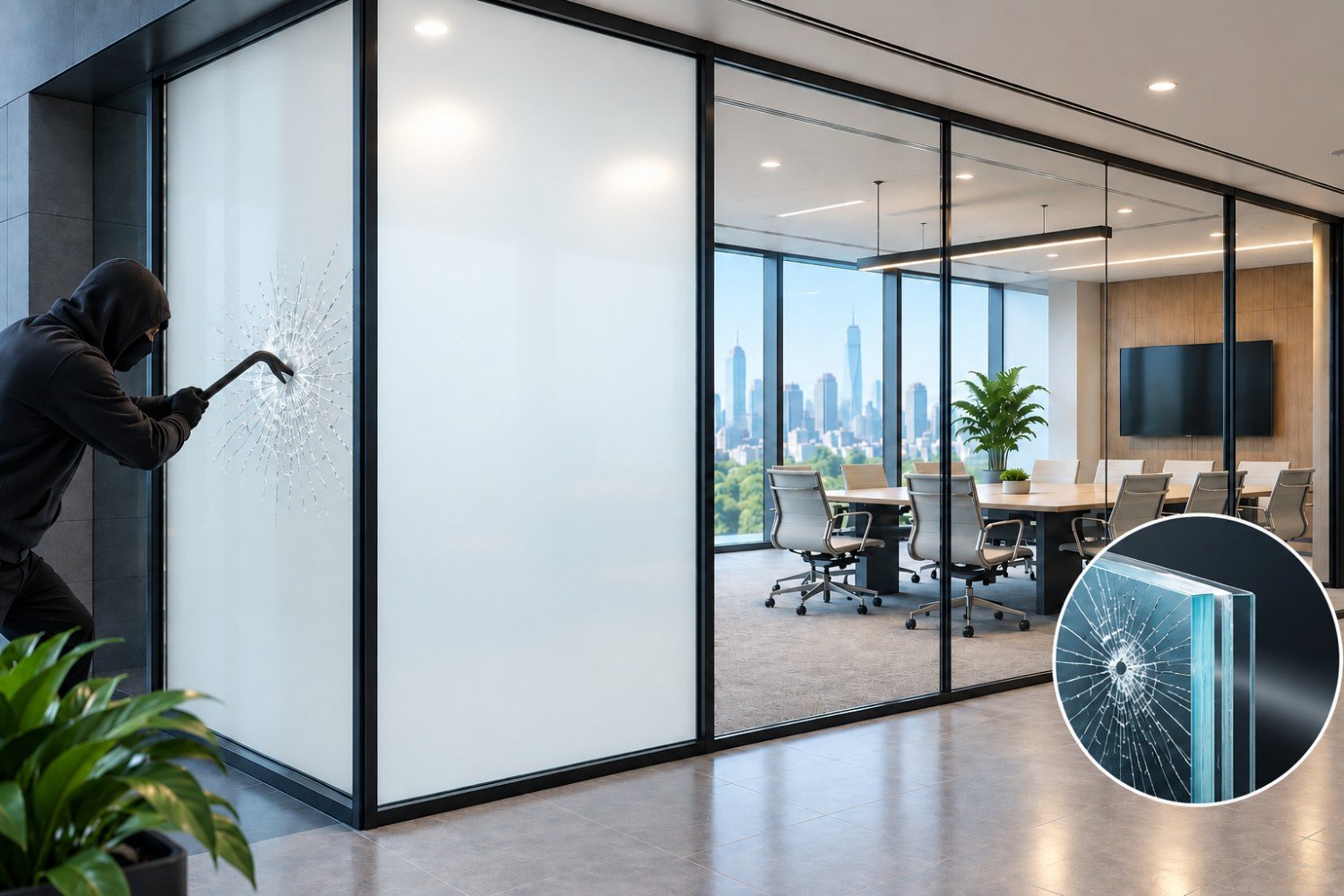
Modern buildings rely heavily on glass—but transparency comes with trade-offs. In our work with homeowners, architects, and facility managers across the UAE, a recurring challenge is clear: how to maintain openness without increasing security risk. Smart glass security solutions address this by combining privacy control, impact safety, and visual protection into one adaptable system that supports both design intent and real-world security needs.
Why Security and Safety Are Now Core Design Priorities
Glass-forward architecture is now standard across residential, commercial, hospitality, and healthcare spaces in the UAE. While this enhances daylight and visual appeal, it also introduces vulnerabilities. Increased visibility into interiors, greater perceived exposure to break-ins, and street-facing layouts in villas, apartments, and offices all contribute to growing safety concerns.
Traditional privacy options such as blinds, curtains, and frosted glass tend to solve one problem while creating others. They block light, require frequent adjustment, or permanently obscure views. The challenge today is finding solutions that preserve openness and comfort while improving security and control—without adding operational complexity.
What Makes Smart Glass a Security-First Solution
How Smart Glass Works
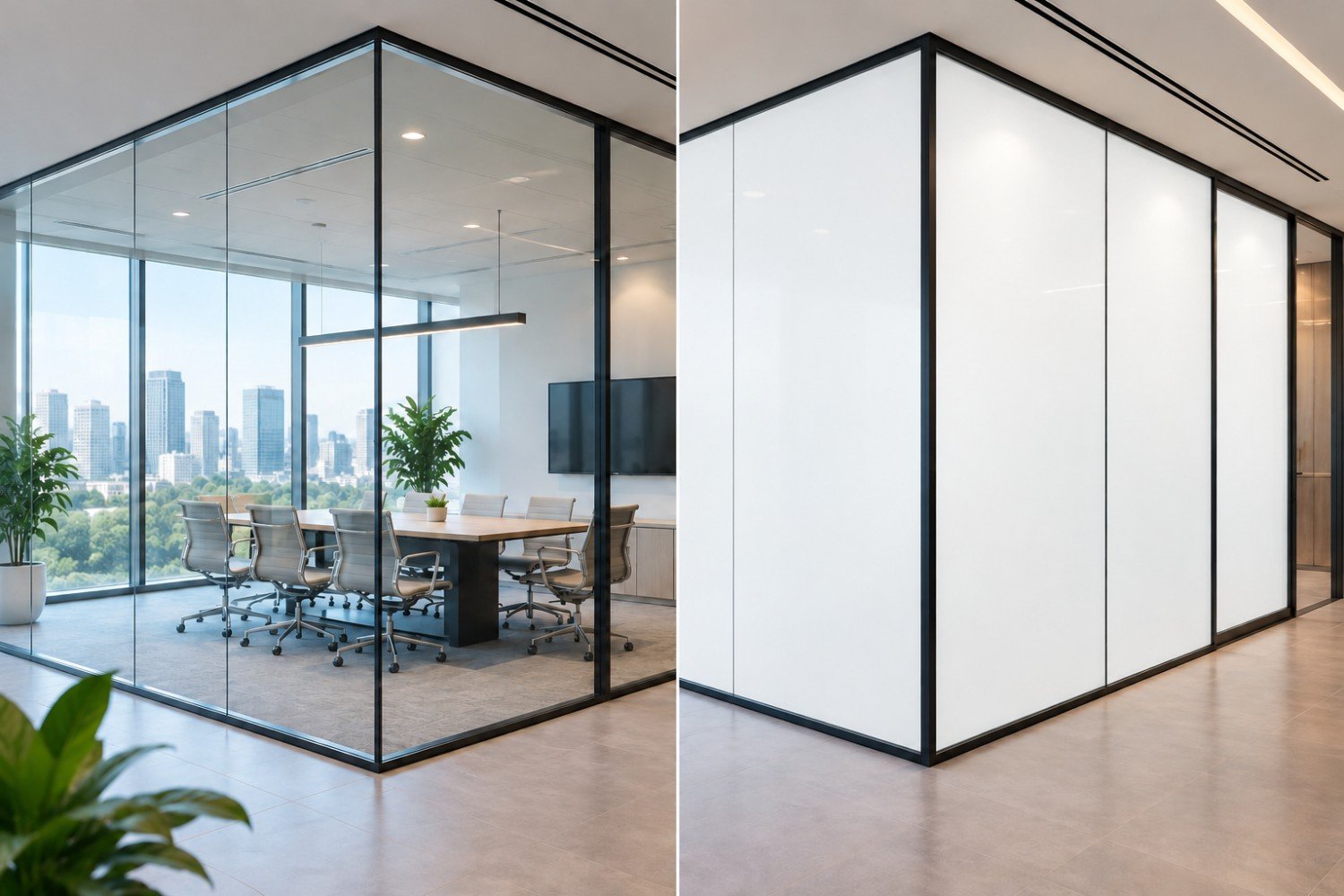
Smart glass film uses PDLC (Polymer Dispersed Liquid Crystal) technology to switch between clear and opaque states. When powered, the glass remains transparent; when switched off, it becomes opaque instantly. This allows visibility to be controlled in real time, rather than relying on fixed or mechanical privacy solutions.
Privacy Control as a Security Feature
In many buildings, visibility is the first security weakness. Smart glass reduces this risk by limiting what outsiders can see without permanently closing off spaces. Interior views can be blocked when needed, valuables are less visible to passersby, and street-facing rooms gain privacy without losing daylight. This makes smart glass for privacy and security UAE projects particularly relevant in high-traffic or densely built environments.
Safety vs Security: How Smart Glass Addresses Both
Smart glass is not just about visual control. When combined with laminated glass, it contributes to switchable glass safety by reducing injury risk during breakage while also discouraging intrusion through reduced visibility. Instead of treating safety and security as separate systems, smart glass allows both to function together as part of a unified approach.
Shatter Resistance and Impact Safety in Smart Glass
How Smart Glass Handles Impact and Breakage
Smart glass film is typically used with laminated glass assemblies. In the event of impact, the glass may crack, but fragments remain bonded to the interlayer. Sharp shards are minimized, and the opening often stays partially intact. This performance is consistent with architectural safety glass used in vehicles and public buildings.
Injury Prevention in Residential and Commercial Spaces
The safety benefits are most apparent in environments where accidental impact or public interaction is common. Schools, healthcare facilities, and hospitality spaces all benefit from reduced glass fallout, lowering the risk of injury during accidents or acts of vandalism.
Is Switchable Glass Impact Resistant?
A common question is whether switchable glass is inherently stronger. Smart glass itself is not bulletproof, and impact resistance depends on the laminated glass specification. However, compared to standard float glass, laminated smart glass performs significantly better. When properly specified, switchable glass is impact resistant and aligned with modern safety standards.
Privacy and Protection for Street-Facing Glass
Smart Glass for Home Security in the UAE
For villas, apartments, and ground-floor units, smart glass for home security offers a practical alternative to blinds or frosting. Privacy can be activated instantly, clear views remain available when desired, and daylight is preserved. This directly addresses concerns around how smart glass improves home security without making living spaces feel closed or defensive.
Managing Visibility in Tall Windows and Open Facades
Large glass panels and double-height facades are difficult to manage with curtains or films. Smart glass delivers uniform opacity across tall glazing, maintains clean aesthetics without mechanical systems, and offers better long-term appearance compared to traditional window films.
Instant Privacy During Security Incidents
In unexpected situations—such as nighttime exposure, deliveries, or sudden activity—one-touch opacity provides immediate visual control. This responsiveness is difficult to achieve with manual privacy solutions.
Smart Glass vs Traditional Privacy Solutions
Smart Glass vs Frosted Glass for Security
When comparing smart glass vs frosted glass for security, flexibility is the key difference. Frosted glass is permanently opaque, while smart glass allows dynamic switching. Visual quality is more consistent, and spaces remain adaptable rather than fixed.
Smart Glass vs Blinds and Curtains
Blinds and curtains require ongoing adjustment, block light when privacy is needed, and introduce wear over time. Smart glass removes mechanical components entirely, simplifying use and reducing maintenance.
Smart Glass vs Window Films
Lower-quality films often suffer from uneven appearance, peeling, and limited lifespan. Professionally installed smart glass film offers superior durability and long-term visual consistency.
Real Comfort Advantage: Daylight Without Heat
Smartglass eliminates the trade-off between cooling efficiency and natural light. Rooms stay bright and comfortable—without overheating or relying on blackout blinds.
Use Cases Across Buildings and Industries
Residential Homes and Villas
Privacy glass for homes is commonly used for street-facing windows, boundary walls, and internal partitions where flexibility is essential.
Offices and Commercial Buildings
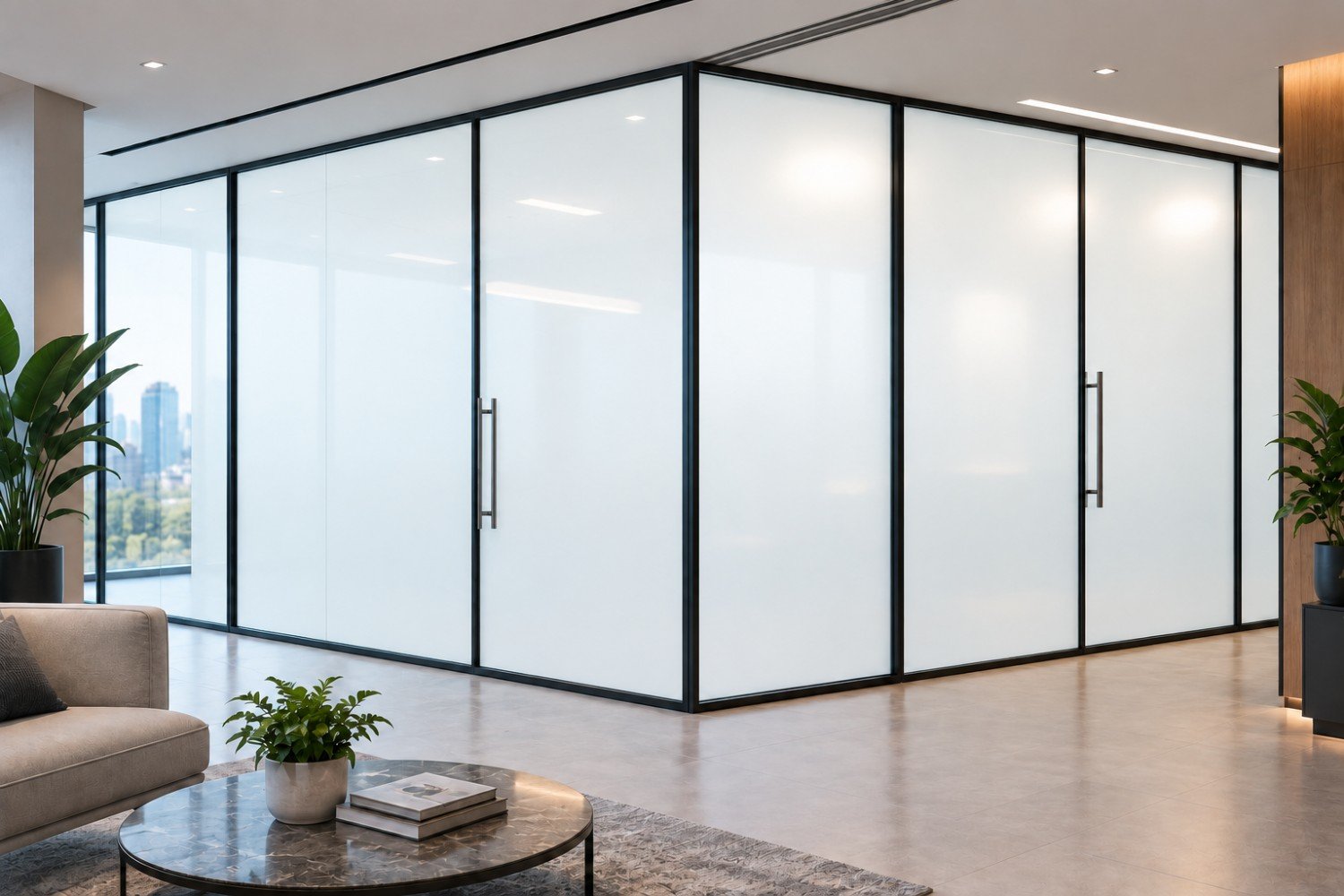
Smart glass for buildings is widely adopted in meeting rooms, reception areas, and glass facades that require adaptable privacy without visual clutter.
Hospitality and Retail Environments
Hotels and retail spaces benefit from guest privacy without heavy drapery and from storefront visibility that can be adjusted throughout the day.
Healthcare and Education Facilities
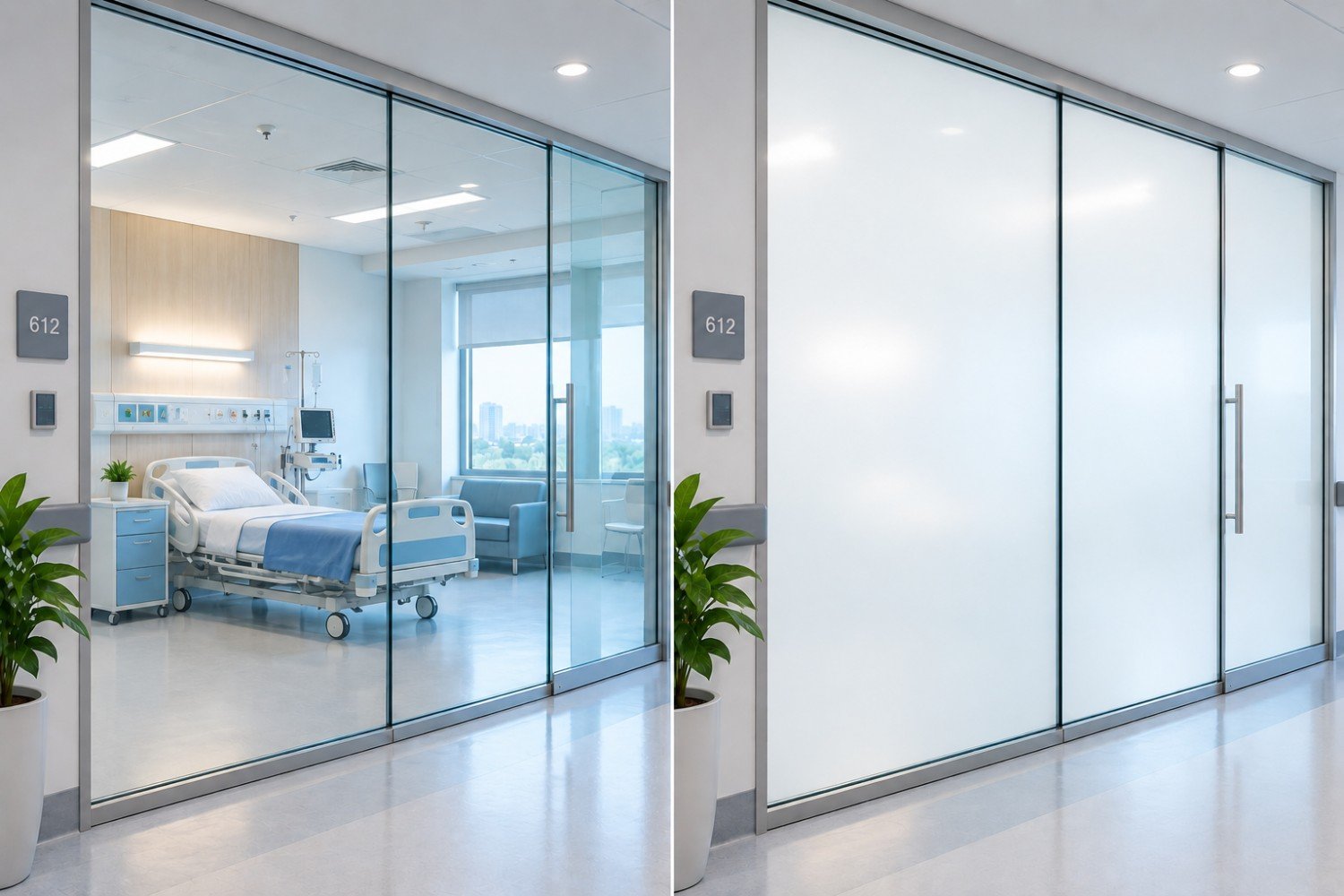
In these settings, smart glass supports patient privacy, hygienic surfaces, and compliance with safety requirements.
Durability, Lifespan, and Reliability of Smart Glass
Long-Term Performance of Switching Technology
Modern smart glass film is designed for high switching-cycle durability, stable performance over years of use, and minimal visual degradation.
What Happens During Power Failure?
In most installations, the glass defaults to an opaque state during power loss. Privacy is maintained, and no additional safety risk is introduced—often a preferred fail-safe condition.
Environmental Performance in UAE Conditions
For smart glass windows UAE projects, heat, UV exposure, dust, and sand are key considerations. Proper specification ensures long-term reliability and supports broader security glass solutions UAE requirements.
Cost vs Value: Is Smart Glass Worth It for Security?
Understanding Smart Glass Cost vs Traditional Options
While upfront costs may be higher, smart glass often replaces multiple systems such as blinds, curtains, and films.
Security ROI Compared to Blinds, Films, and Laminated Glass
Over time, value is realized through reduced maintenance, fewer replacements, and improved usability across different spaces.
Where Smart Glass Delivers the Most Value
The strongest return is typically seen in high-visibility areas and multi-use environments where flexibility is critical.
Installation Considerations Without Interior Disruption
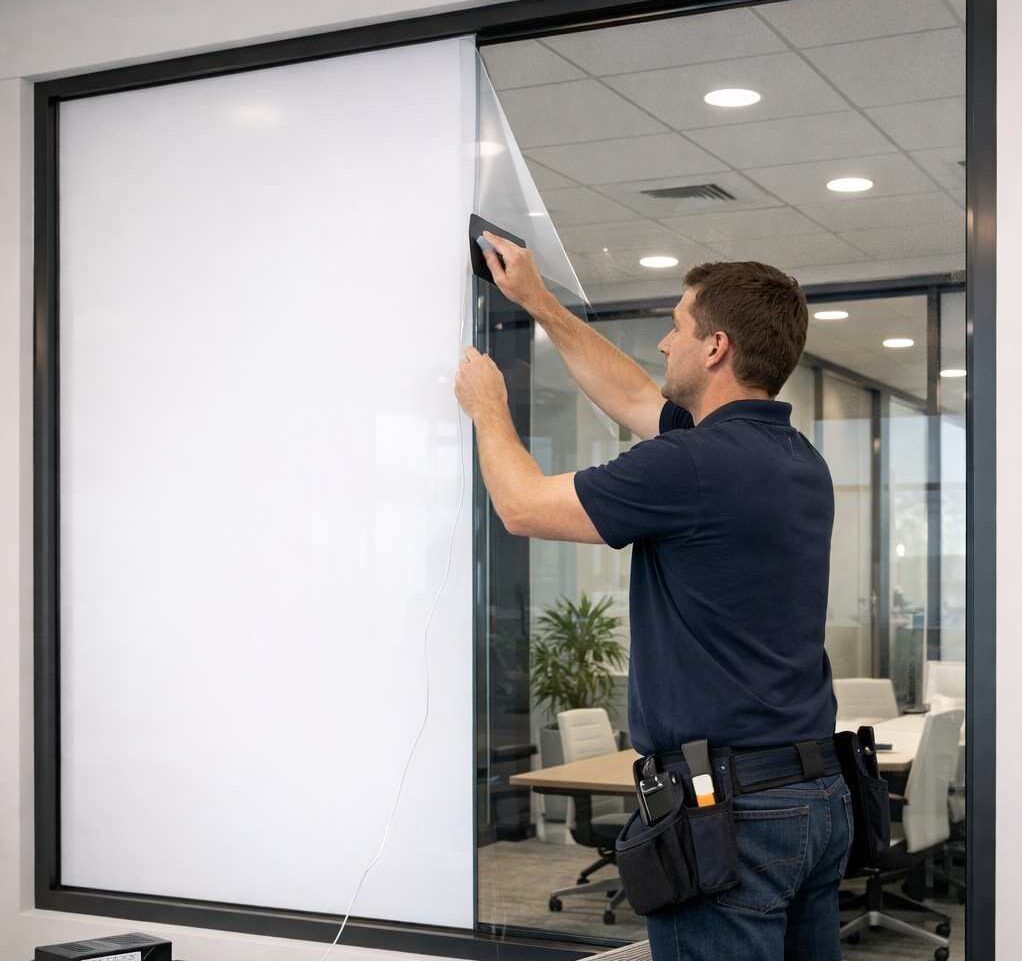
Retrofitting Smart Glass or Smart Film
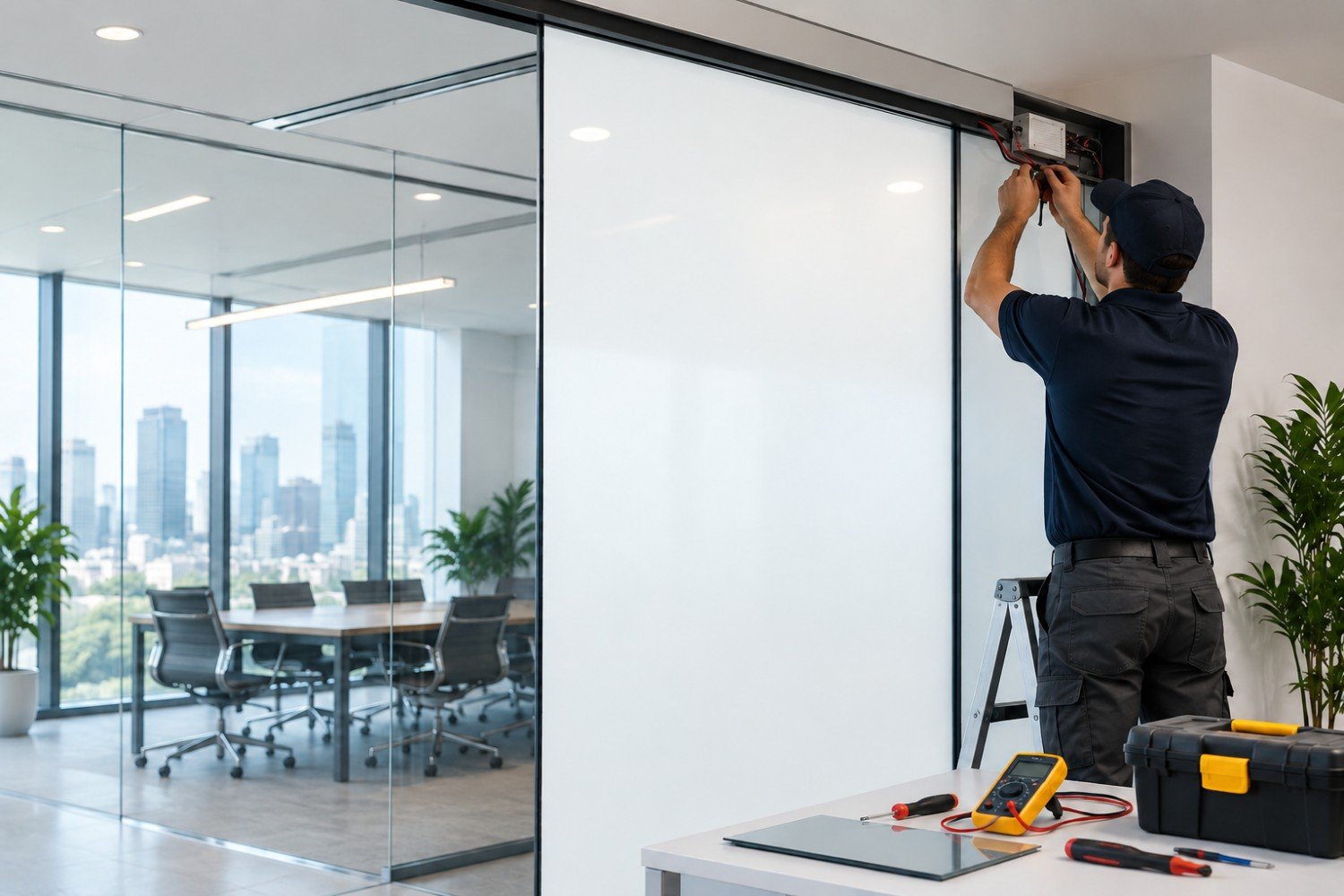
Smart glass film can often be retrofitted with minimal disruption, no major demolition, and compatibility with finished interiors.
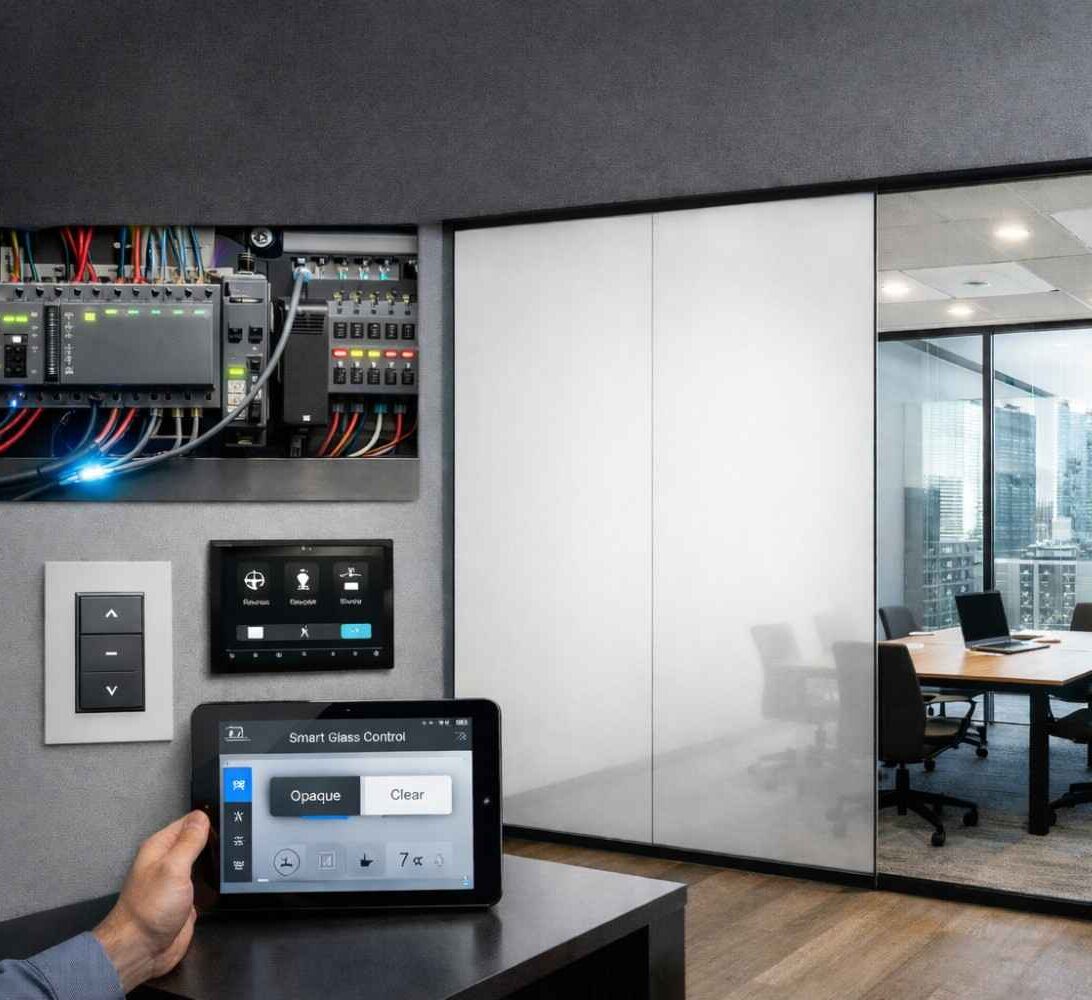
Wiring, Controls, and Integration
Systems integrate smoothly with wall switches, automation platforms, and building management systems.
Myths and Misconceptions About Smart Glass Security
Common misconceptions include the idea that smart glass is only for privacy, breaks easily, looks too commercial, or lacks long-term reliability. In practice, these concerns usually stem from poor specification or outdated products rather than the technology itself.
Is Smart Glass the Right Security Solution for Your Space?
When Smart Glass Is a Strong Fit
Smart glass is well suited to visibility-sensitive environments and spaces that serve multiple functions throughout the day.
When Other Security Measures May Be Needed
It works best as part of a layered security strategy, complementing access control, surveillance, or physical barriers.
Explore Smart Glass with Keystone Smartglass Film
Evaluating Smart Glass for Your Safety Needs
We focus on understanding how spaces are actually used before recommending solutions.
Combining Privacy, Safety, and Security
Smart glass allows these goals to coexist without compromise.
Designed for UAE Homes and Buildings
Our approach reflects local climate conditions, building practices, and security expectations—helping clients make informed, practical decisions.