
Why Architects Are Choosing Smart Glass for Modern Commercial Buildings
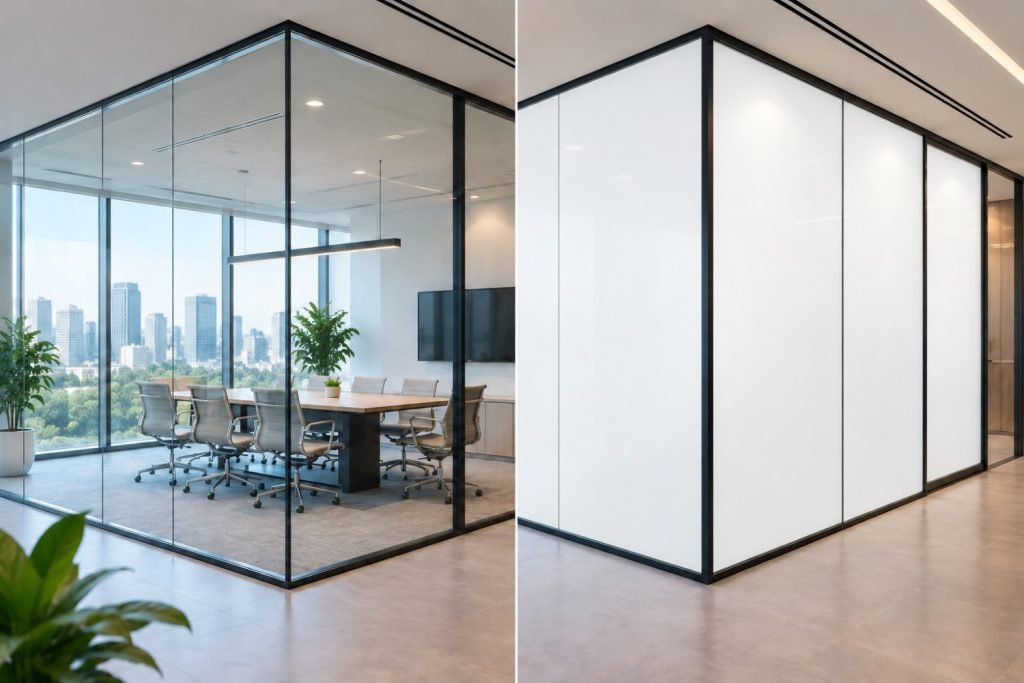
Blog Why Architects Are Choosing Smart Glass for Modern Commercial Buildings Table of Contents Modern commercial architecture is evolving rapidly. Today’s office spaces are designed to feel open, flexible, and collaborative while still supporting privacy, comfort, and productivity. Businesses no longer want interiors filled with bulky walls, outdated blinds, or closed-off workspaces that limit natural light and make offices feel smaller. As a result, architects and interior designers are increasingly turning to smart glass technology to create adaptable environments that balance transparency with privacy. Smart glass allows commercial spaces to remain bright and visually connected while giving occupants instant control over visibility when needed. The growing demand for smart buildings, energy-efficient design, and employee-focused workplaces has pushed smart glass into mainstream commercial architecture. From corporate offices and healthcare facilities to hospitality properties and retail spaces, switchable glass systems are becoming a preferred solution for modern interior design. What Is Smart Glass and How Does It Work? Smart glass is a switchable glazing technology that changes from transparent to opaque with the help of electrical current. It provides instant privacy without the need for curtains, blinds, or permanent frosted glass. One of the most widely used technologies in commercial buildings is PDLC smart film, which stands for Polymer Dispersed Liquid Crystal technology. When electricity passes through the film, the liquid crystals align, allowing the glass to appear clear. When the power is switched off, the crystals scatter, turning the surface opaque. Commercial buildings typically use smart glass in two ways: Factory-manufactured switchable glass systems Retrofit smart film applied directly to existing glass surfaces Many architects prefer retrofit smart film during renovations because it minimizes construction disruption and avoids the cost of replacing entire glazing systems. This makes it especially practical for office upgrades where businesses want improved functionality without extensive downtime. Smart glass is now commonly installed in: Conference rooms Executive offices Healthcare consultation areas Hotel suites Collaborative office spaces Retail presentation areas Because these systems can integrate with building automation and smart controls, they fit naturally into technology-driven commercial environments. Why Architects Prefer Smart Glass in Commercial Projects One of the biggest reasons architects choose smart glass is flexibility. Modern offices are no longer designed around fixed layouts. A meeting room may function as a collaborative space during the day and become a private presentation area later. Smart glass supports these transitions instantly without requiring permanent structural changes. Architects also value the clean, minimalist appearance smart glass creates. Traditional blinds and curtains often interrupt sleek interior aesthetics and can make offices feel outdated or cluttered. Smart glass maintains a modern visual flow while still delivering practical privacy control. Another major advantage is daylight optimization. Natural light has become a central focus in workplace design because brighter environments can improve comfort, mood, and overall employee experience. Unlike drywall partitions or permanently frosted glass, smart glass allows offices to maintain openness and daylight penetration while still offering privacy when necessary. The rise of hybrid work environments has also increased the need for adaptable office layouts. Businesses now require spaces that support collaboration, focused work, virtual meetings, and confidential discussions within the same environment. Smart glass helps organizations create flexible interiors without compromising design consistency. Many architects also specify switchable glass because it aligns with modern smart building strategies. Companies pursuing LEED certification or WELL Building Standard goals often prioritize technologies that improve occupant comfort, daylight access, and workplace functionality. Common Commercial Challenges Smart Glass Solves Open-plan offices continue to create privacy concerns in many industries. Employees are often distracted by surrounding movement, conversations, and visual activity, which can reduce concentration and productivity. Conference rooms with clear glass walls can also create discomfort during sensitive meetings involving HR discussions, legal matters, financial planning, or client presentations. Smart glass solves these issues by providing instant privacy on demand. Instead of permanently blocking visibility, offices can switch between transparent and opaque modes depending on how the room is being used. Another challenge businesses face is renovation cost and long-term adaptability. Traditional drywall construction is expensive, disruptive, and difficult to modify later. Many organizations now prefer office designs that can evolve as teams and operational needs change. Traditional blinds also create maintenance problems over time. Dust accumulation, broken slats, and inconsistent appearance can negatively affect workplace aesthetics. Smart glass eliminates many of these concerns while supporting cleaner architectural lines. For industries that require both collaboration and confidentiality, smart glass provides a practical balance between openness and privacy. Key Benefits of Smart Glass for Office Spaces The benefits of smart glass extend beyond appearance alone. One of the most valuable advantages is instant privacy control. Offices can quickly transform transparent meeting rooms into confidential spaces without physically altering the environment. Natural light retention is another significant benefit. Bright workplaces typically feel more welcoming, comfortable, and professional for employees, clients, and visitors. Smart glass maintains daylight flow while improving visual privacy. Businesses also use smart glass to strengthen brand perception. Technology-driven office interiors often communicate innovation, professionalism, and forward-thinking company culture. From a maintenance perspective, smart glass reduces many of the issues associated with traditional blinds and curtains. With fewer moving parts and simplified cleaning, offices can maintain a more polished appearance over time. Another advantage is long-term adaptability. As organizations grow and workplace needs evolve, smart glass allows interiors to remain flexible without major reconstruction. Smart Glass Applications Across Industries Smart glass is now used in a wide range of commercial environments because of its versatility and modern appearance. In office settings, it is commonly installed in executive offices, meeting rooms, training centers, and collaborative workspaces. Healthcare facilities use switchable glass in consultation rooms, patient areas, and treatment spaces where hygiene and confidentiality are equally important. Hospitality brands increasingly incorporate smart glass into hotel suites, luxury bathrooms, spas, and guest spaces to create a premium experience. Retail environments also use smart glass to build adaptable storefronts and presentation areas without relying on permanent visual barriers. For existing properties, retrofit PDLC smart film provides a practical upgrade