
How to retrofit smart film on existing windows
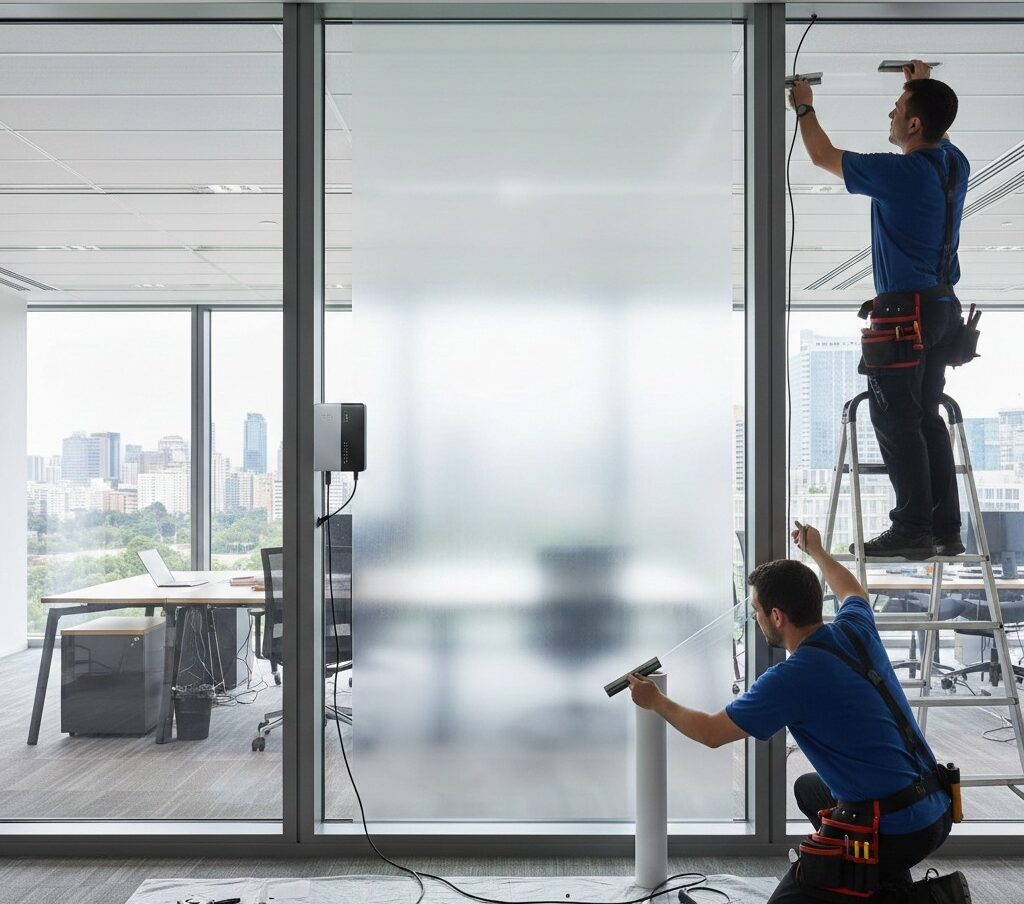
Blog Table of Contents How to Retrofit Smart Film on Existing Windows Retrofitting smart film onto existing windows and doors is a practical way to upgrade privacy, light control, and interior flexibility without replacing glass. In this guide, we explain how to retrofit smart film on existing windows, based on real installation experience across residential, commercial, and hospitality spaces. Smart Film Retrofitting Smart film retrofitting refers to applying self-adhesive PDLC smart film directly onto existing glass surfaces. Unlike full smart glass replacement, retrofitting works with what’s already installed, making it faster, cleaner, and far more cost-effective. Smart Film vs Smart Glass Smart film retrofit Applied to existing glass, minimal disruption, lower cost Smart glass replacement Existing glass removed and replaced with laminated switchable glass For most retrofit projects, smart film is the preferred solution. Why Smart Film Enables Renovation Smart film installs on the interior side of glass and requires: No glass removal No frame modification No structural changes This makes it ideal for occupied spaces. Windows, Doors, and Glass Partitions as Retrofit Targets Smart film works well on: Windows and sliding doors Shower glass Office partitions and meeting rooms Interior glass walls Existing Glass Compatibility Not every glass surface is suitable. A proper assessment prevents long-term issues. Ideal Glass Conditions for Retrofit Applications Smooth, flat, non-textured glass Clean, intact seals Structurally sound frames Interior-facing glass (recommended) Situations Where Retrofit Is Not Recommended Aged or failing seals Uneven, frosted, or patterned glass Cracked panes or loose frames Smart Film Retrofit Options Explained PDLC Smart Film as a True Retrofit Solution This is the most common retrofit method: Pressure-sensitive adhesive Applied directly to existing glass Electrically switchable between clear and opaque Switchable Laminated Glass as a Replacement Alternative Used only when: Glass is damaged Regulations require laminated solutions Retrofit film is not feasible Tools Required for Smart Film Retrofit Essential Installation Tools Spray bottle (installation solution) Squeegee Utility knife Measuring tape Measuring tape Lint-free wipes Electrical Components Step-down transformer Manual switch or smart controller Concealed wiring accessories Adhesives and Sealants Used in Retrofit Projects Neutral-cure silicone (mandatory for edge sealing) Smart Film Retrofit Process Surface Preparation and Dust Control Glass must be: Thoroughly cleaned Free of dust, grease, and residue Dust is the most common retrofit failure point. Measuring and Dry Fitting the Film We always dry-fit before peeling the liner to confirm: Correct sizing Busbar alignment Cable exit positioning Achieving Proper Alignment on Existing Glass Precise alignment ensures: Uniform opacity Clean edges Professional finish Applying Self-Adhesive Smart Film Peel liner gradually Use solution to reposition if needed Apply even pressure Removing Moisture and Air Bubbles Use a squeegee to push moisture outward from the center. Trimming Film Accurately Without Material Waste Trim only after full adhesion is achieved. Edge Sealing for Long-Term Performance All exposed edges must be sealed with silicone to prevent moisture ingress. Simple Wiring for Smart Film Retrofits Plug-and-Play Transformer Systems Modern systems allow: Simple power connection No hard electrical rewiring Concealing Wiring Without Wall Modifications Wiring can be hidden: Within frames Along silicone seams Behind trims or mullion Smart Switches and App-Based Control Options Options include: Wall switches Remote controls App and automation integration Electrical Safety and Power Considerations Correct transformer sizing is essential for film longevity. DIY vs Professional Smart Film Scenarios Where DIY Retrofit Is Practical Small panels Non-critical visual areas Technically confident installers Situations That Require Professional Installation Large glass panels High-visibility areas Complex wiring paths Hospitality and healthcare environments Quick Retrofit Decision Checklist If alignment, dust control, or wiring access is uncertain, professional installation is strongly advised. Challenges in Smart Film Retrofit Dust or Debris Trapped Beneath the Film Leads to visible imperfections. Film Alignment and Positioning Issues Misalignment affects switching uniformity. Persistent Air Bubbles or Visual Haze Usually caused by rushed installation. Cutting Errors and Material Waste PDLC film is not forgiving once cut incorrectly. Long-Term Adhesion Concerns Improper edge sealing is the main cause. Window Clarity and Visual Performance Visibility in Clear and Opaque States In the clear state, modern PDLC film offers high transparency.Opaque mode provides full privacy with even light diffusion. Light Diffusion and Minor Haze Characteristics A slight haze is normal and inherent to PDLC technology. Advancements in Modern PDLC Film Technology Newer films deliver: Better clarity Faster switching Improved durability Retrofit Timeline & Downtime Typical Installation Time Per Window or Door Small panels: under 1 hour Large panels: 1–2 hours Retrofit Feasibility in Operational Spaces Installation can be done: During office hours Without vacating rooms Smart Film Installation in Occupied Homes and Offices Minimal noise, no dust, no construction. Smart Film Retrofit vs Glass Replacement Costs Typical Smart Film Retrofit Cost Ranges Costs vary based on: Film size Control system Installation complexity Retrofit Costs vs Full Glass Replacement Retrofit is significantly more economical than replacing glass. Long-Term Value Beyond Privacy and Light Control Benefits include: Reduced blinds and curtains Flexible space usage Modern aesthetics Maintenance Considerations After Smart Film Retrofit Cleaning and Care Guidelines Soft cloths only No abrasive cleaners Edge Seal Durability Over Time Periodic inspection ensures longevity. Transformer and Electrical Component Lifespan Typically long-lasting with proper ventilation. Smart Film Retrofit Performance in UAE Climate Conditions Heat Exposure and Adhesive Performance Interior installation protects the adhesive from direct sun load. Dust, Humidity, and Edge Sealing Challenges Proper sealing is critical in humid environments. Evaluating Whether Smart Film Retrofit Fits Your Project Ideal Use Cases for Retrofit Solutions Privacy upgrades Design flexibility Operational buildings Situations Where Alternative Solutions Perform Better Severely damaged glass Exterior-only installations Smart Film Retrofit FAQs Smart film installation on existing windows Yes, PDLC smart film is designed specifically for existing glass. PDLC smart film compatibility with current glass Most smooth, clear glass surfaces are compatible. Tools required for retrofit projects Basic installation tools plus electrical components. Reliability of DIY smart film installation Possible, but professional installation reduces risk. Impact of smart film on window clarity Minimal haze; modern films offer high clarity. Smart Film Retrofit with Keystone Understanding Retrofit Options for